Hayden is a very high-spirited young guy, who is often referred to as the funniest child ever, as he loves to joke around with his peers and make those around him smile. He is also a really good listener, and that is what makes him a great friend to his peers. Like many children his age, Hayden loves playing video games especially on his Nintendo Switch. One of his favorite things to do is to go swimming as he really enjoys time in the pool. He also loves to use his creative side, building and constructing ideas he has, of things he designs. When it comes to eating, Hayden loves to be adventurous, trying all kinds of foods, and looks forward to expanding taste pallet. Hayden enjoys attending school, as he likes to learn about the world around him. Hayden hopes to have a forever family that will encourage his interests and provide him the memories of sharing in new family activities. When asked, he says he would like a two parent family, where a mom and dad can help love & guide him as he grows. If you think you could be Hayden’s forever family or for another Texas child, please contact the department at 1-800-233-3405, for more information about adoption or https://www.dfps.texas.gov/Application/TARE/Home.aspx/Default You can also find a schedule of online public information meetings where you can learn more about the foster/adoption program.
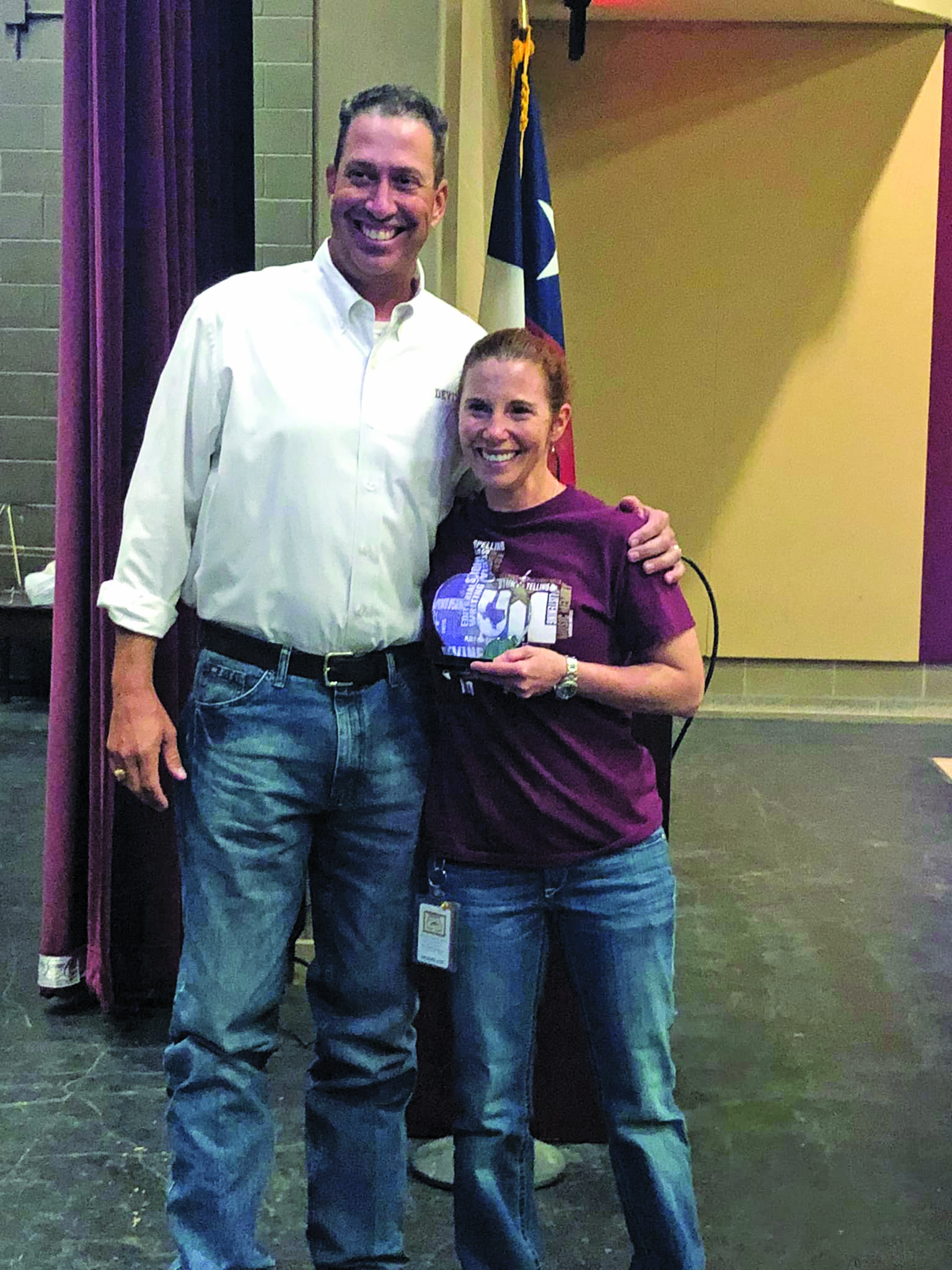
Middle School teacher of the year Christian Guerra recieves her award from Superintendent Grandjean.Elementary-Cindy ZuercherIntermediate-Melody RiouHigh School-Marisol Rangel Garcia
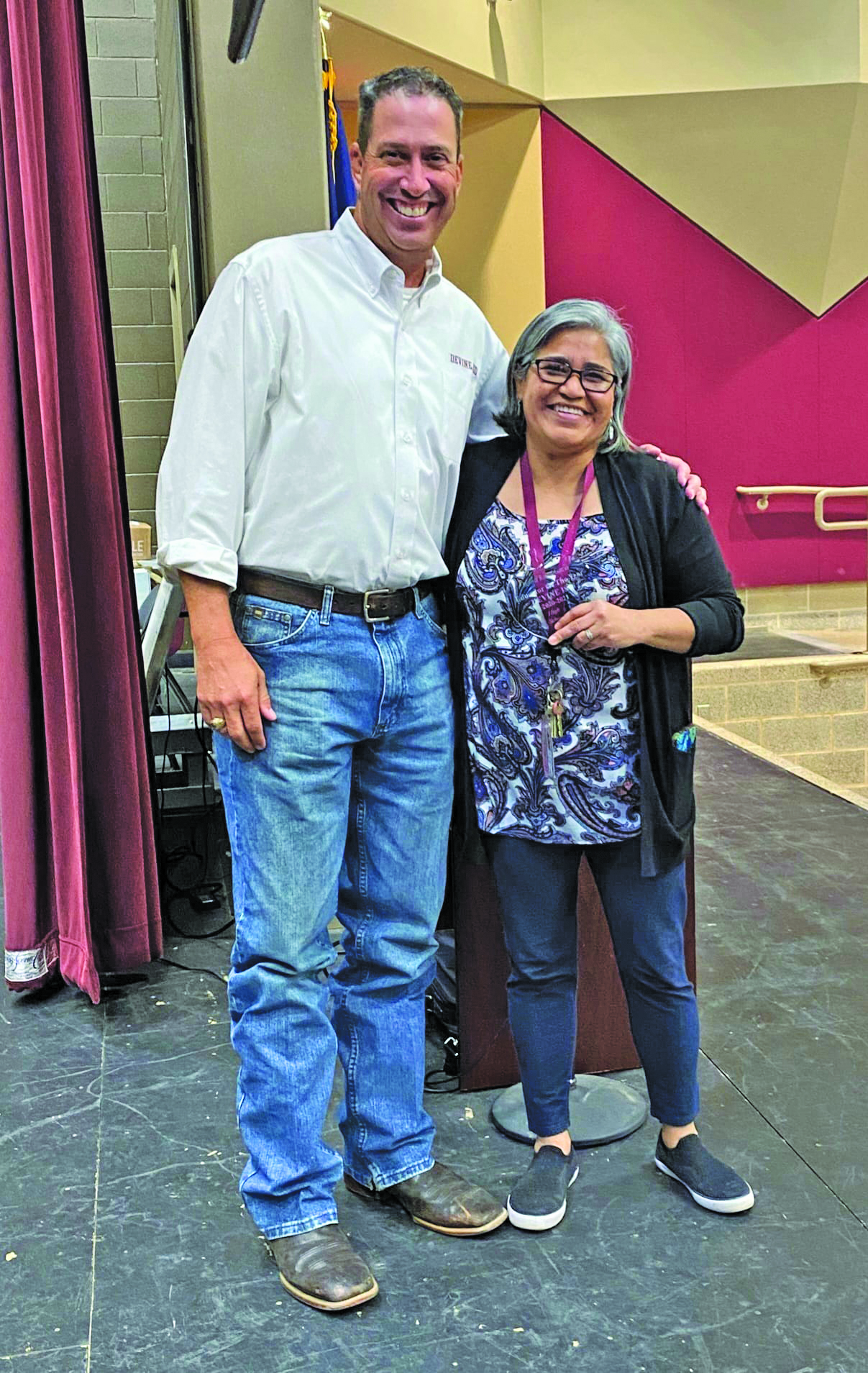
At the conclusion of the school year, Devine ISD awarded top honors to four dedicated educators this year. The following teachers receiving the Educator of the Year Award for their respective campuses in Devine ISD are: Elementary–Cindy Zuercher Intermediate–Melody Riou Middle School–Christian Guerra High School–Marisol Rangel Garcia Dr. Grandjean also awarded service pins to many dedicated educators who have served our district 5, 10 and even 25 years, and awarded a special certificate of appreciation to Wendy Martinez for doing such a good job protecting students at the crosswalk. Retirees Devine ISD had 13 employees retire this year and have hired five new teachers for the next school year. They currently have many openings in the district: Elementary – 3, Middle School – 5, High School – 9, as well as others within the district. Steve Anderson, 26 years to DISD, 29 years total in educatio Mark Berg, 5 years to DISD, 19 years total in education David Cardenas, 30 years all in DISD Cristina Esquivel, 2 years to DISD, 29 years total in education Linda Evans, 27 years all in DISD Jeff Miller, 13 years to DISD, 30 total years in education Shawn Mullins, 22 years all in DISD Barbara Nelson, 39 years all in DISD Nannette Pilaczynski, 21 years all in DISD Gary Schmidt, 26 years to DISD, 27 total years in education Shirley Wimett, 10 years to DISD, 32 total years in education Scott Taylor, 24 years to DISD, 24 years to DISD, 29 total years in education Cindy Zuercher, 17 years to DISD, 35 total years in education New Hires: Gensen Merritt, 5th grade teacher Justin Marcrum, 5th grade teacher Alexandra Escobar, Intermediate Spec Ed Teacher Humberto Sanchez, Head Band Director Larry Waddle, Ag Science Teacher Open Positions: Elementary School Counselor (PK-2) Elementary School Teacher (PK-2) Elementary School Special Education Aide (PK-2) (2 positions) Middle School Science Teacher/Boys’ Athletic Coach (6-8) Middle School Art Teacher (6-8) Middle School Special Education Math & Inclusion Teacher (6-8) Middle School Math Teacher (6-8) Middle School Instructional Aide (6-8) High School Teacher (9-12) (ESSER Funded) High School Math Teacher (9-12) High School Math Teacher/Boys’ Athletic Coach (9-12) High School Science Teacher OR High School Science Teacher w/Boys’ Athletic Coach (9-12) High School Spanish Teacher/Boys’ Athletic Coach (9-12) High School English Teacher (9-12) High School Family & Consumer Science Teacher (9-12) (2 positions) High School Nursing Science Teacher (9-12) High School Attendance Clerk (9-12) Speech Language Pathologist or Speech Language Pathology Assistant Substitutes for Nurses Bus Drivers Custodian(s) Cafeteria Worker
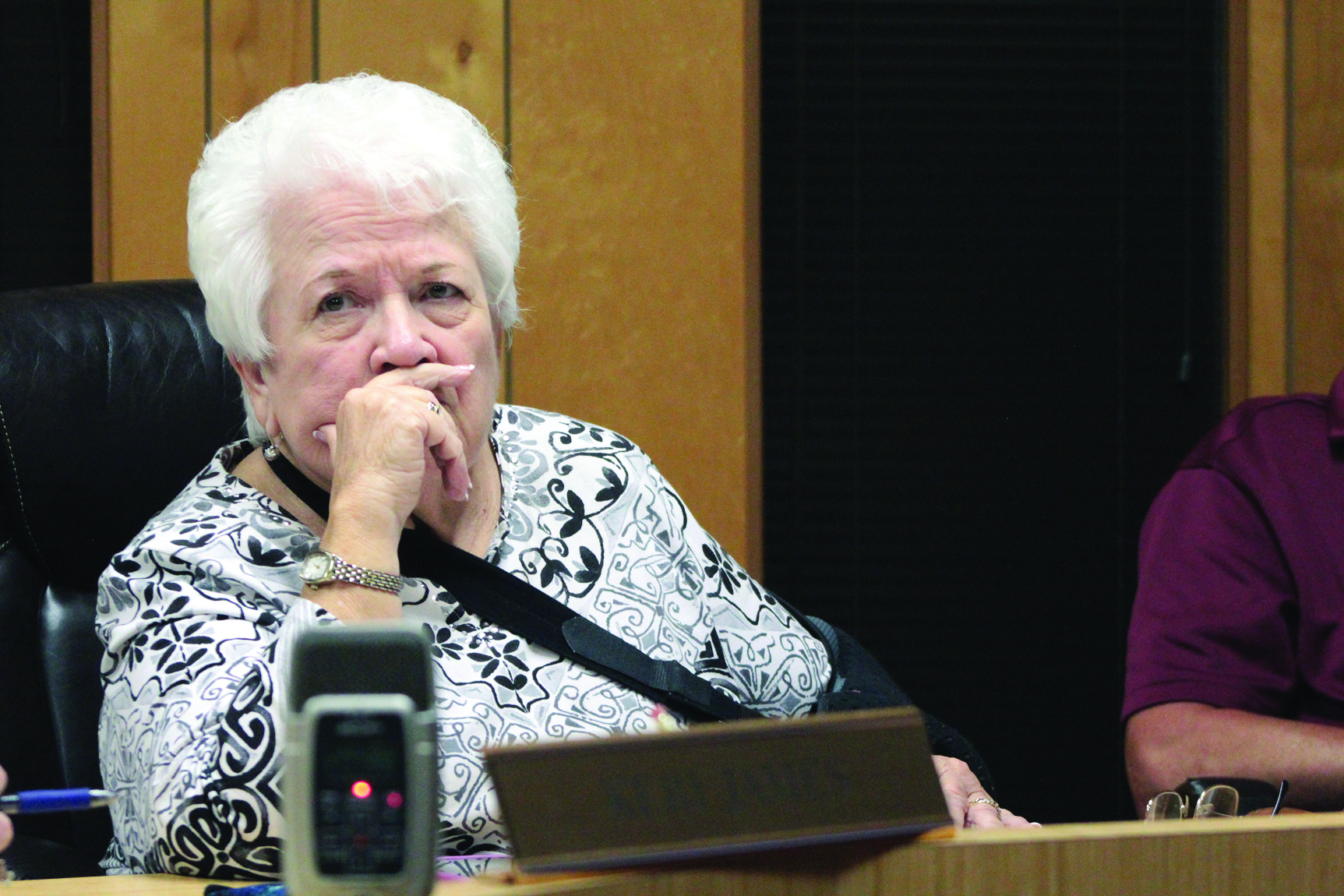
Devine ISD school board president Nancy Pepper takes in a presentation of proposed solutions to a possible $2.5 million budget shortfall expected by the district. The board met in special session Monday to consider possible action. (Photo by Anton Riecher)
By Anton Riecher A tax ratification election in November is being considered as part of the complicated resolution to a possible $2.5 million Devine ISD budget shortfall attributed to uncertainty of appraised property values (since so many were protested). Going the tax ratification route would allow the district to regain any funding lost from tax collection by means of state aid, Superintendent Todd Grandjean told the board in a budget meeting Monday evening. “With being able to go out for a TRE we would have a more assertive way to tell (voters) that this is going to happen,” he said. Much of what was discussed hinges on a pending special session of the Texas Legislature called by Gov. Greg Abbott to further debate property tax relief and other issues. The school board is also considering taking $717,961 from $1.1 million in remaining elementary and secondary school emergency relief (ESSER) funds to support budgeted salary increases. As explained by the district’s chief financial officer Shannon Ramirez the proposed election revolves around the use of $689,624 in “golden pennies” or Tier II funding set aside by the school board in its formula to “compress” the tax rate. (Editor’s note: The state’s definition of “golden pennies” is stated as follows: Golden pennies provide tax revenue that is not subject to recapture by the State of Texas. Using golden pennies is an exercise of LOCAL control. Voters decide to access the pennies; all the revenue generated by them stays in the school district. Compression refers to an intentional act to lower the tax rate which, in turn, reduces what taxpayers owe. “When this passed we did a resolution to keep five of our pennies,” Ramirez said. “There are still some pennies out there that we could get back. It would go to the voters in November in the general election.” Beside the golden pennies still available, the district could also reclaim nine copper or Tier I pennies held in reserve totaling $46,875, she said. (Editor’s note: A Texas Tribune article on school finance explains “copper pennies” as “Any money a district raises with pennies seven through 17 — so-called “copper pennies” — is subject to recapture. If a district raises more than $31.95 of revenue per copper penny, that overage goes back to the state.) “The golden pennies are the ones that we want more of,” Ramirez said. “We only have three to four but it would bring in over $680,000.” She said she was unsure whether a tax ratification election to certify reclaiming the pennies and a bond election could be held on the same ballot, a reference to any attempt to remount the district’s failed $32.2 million bond issue in May. Grandjean said tax relief measures still being considered by the Texas Legislature are expected to compress tax rates an additional 25 cents. “We need four pennies of the 25 cents the state is about to give (taxpayers) back,” he said. “So in effect their tax rate would be compressed by 21 cents and the way we don’t lose funding is the money we generate and collect off our taxes we just get back from state aid. This is how they are making this all whole.” Board president Nancy Pepper said that winning approval in the tax ratification election cannot be relied on. Using the budgeted ESSER funds to drive down the expected deficit would be more reliable. “We can’t even know if this is going to pass,” Pepper said. “I would think we could use the ESSER funds and we would at least be a little bit better off.” During Monday’s meeting Ramirez reviewed a host of positions at the various district campuses that have been filled, remain unfilled or have been dropped in the effort to further reduce the budget. Other cuts discussed included items such as a $40,000 tractor dropped in favor of several new buses. Unbudgeted open positions at the high school include one FCS (family and consumer sciences) teacher and one ESSER teacher. High school openings that have remained unfilled all year and are not now in the budget include math teacher, a joint math teacher-coach, science teacher and webmaster teacher. At the middle school, open positions for an ESL aide and an ESSER teacher/aide are not included in the budget. The elementary and intermediate schools have no unbudgeted positions, according to Ramirez’ PowerPoint presentation to the board. The budget workshop was limited to discussion only with no action taken. Ramirez told the board in May that questions over final appraised property values might make it impossible to meet budgeted salary increases for teachers. She cited property value protests, ADA (appraised district appraisals) losses and provisions in state tax law as contributing to the expected shortage.
By Kayleen Holder Editor We would like to introduce you to a new dentist in this area, Dr. Justin Crocker, who recently took over a practice on Main Street in Lytle (formerly Dr. Carter’s office). Crocker and his team serve the whole family– serving everyone from children to adults all under one roof. They do everything from braces to root canals to dentures, and also offer modern dentistry options such as “Sleep Dentistry”. “This is really good for patients who are very anxious. We are able to give patients a pill about an hour before the dental work starts so they can be as comfortable as possible,” Dr. Crocker said. This is offered in addition to traditional sedatives such as nitrous oxide or “laughing gas”. Speaking from experience, you’ll find an office staff eager to greet you and book your appointment, and great customer service at this locally owned, small business. They are happy to work around your busy schedule and work towards booking back to back appointments for family members or even see mom and the kids at the same time. “We want it to be as convenient as possible for families who have more than one family member needing an appointment, so a lot of times what we’ll do is have mom getting her teeth cleaned in one room while a child is in the other room getting their x-rays or other work done at the same time, so it’s as seamless as we can make it,” Dr. Croker said. And if you are in need of denture work, Dr. Crocker is working toward offering same-day denture repairs in his office. “A lot of times, patients who need repairs to dentures or partials have to wait a couple days to get them back because it was to be sent off for work. We are going to have a set day, where offer in-house repairs on the same day in-house,” Dr. Crocker said. When it comes to dental issues, Dr. Crocker will tell you–an ounce of prevention can go a long way. “One common thing we see is bleeding gums when you’re brushing your teeth,” he said. “This is a symptom that leads to gum disease. People sometimes tend to put off symptoms like this. Gum Disease is easily treated, and if you come in sooner rather than later, we can keep that from getting worse.” He explains there’s a simple solution to another common dental issue. “As we get older, our bottom teeth tend to get more crowded. We can usually do an Invisalign treatment and set it straight within 6 months. This will keep your teeth more cleansable and keep them healthier for longer.” “A lot of people ask us about a safe whitening treatment too,” Dr. Crocker said. “We have prescription strength, take-home whitening kit that is affordable and effective and very safe.” He fell in love with dentistry when he was in high school. “We had to do a class report on a healthcare professional, so I got to follow around an Orthodontist for a half day. I knew right then and there that was what I wanted to do,” he said. After 23 years, Dr. Crocker still enjoys the profession for many reasons, but his favorite is being able to help others. “Your smile really affects your self esteem, and I love being able to help people with that. As corny as it sounds, it’s the truth,” he said. Dr. Crocker attended the University of Texas at San Antonio where he received a Biology degree. He then went on to graduate from the University of Texas Health Science Center with a Doctor of Dental Surgery degree. After graduation he went into private practice, and he also taught as a clinical professor at the dental school in the department of general dentistry. Dr. Crocker has written and published many articles in dental journals, as well as, lecturing on advances in cosmetic and adhesive surgery. He has done many interesting things in his career including a mission trip to Guatemala to provide dental care to children and also participating in an exchange program with Ashai Dental University in Japan where he spent a week learning about Japanese dental techniques and culture. “Our goal is to offer small town values with high tech care,” Dr. Crocker adds. This June, Lytle Family Dentistry is welcoming dental hygienist Stephanie Morales to the team and will be extending hours to include Fridays too as of mid-June. See ad on page 2 for more details.
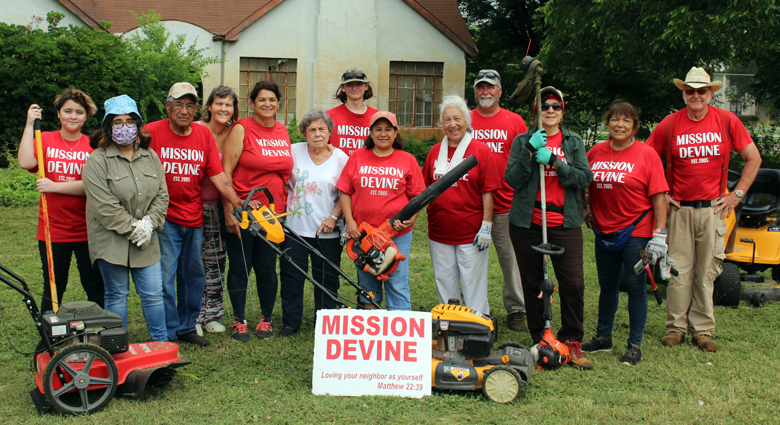
Mission Devine will host its yearly mission week on June 5-10, 2023 with a kickoff on Sunday, June 4 at the First Baptist Church of Devine at 6:00 p.m. Volunteers are still needed as well as funds. Signs are going up daily on Highway 173 between the two churches as donations come in. New ones are being made for the new donors. “We have 30 to 40 projects and will do as many as we can with the funds available, as donations have slowly been coming this year”, said Kim Aaron, Mission Devine Board Member. Those who would like to help monetarily can do so by dropping donations by American Momentum Bank or sending it by mail to Mission Devine, PO Box 42, Devine, Tx. 78016. Volunteers are still needed as well. “We are always in need of more craftsmen plus kids to help with lawn mowing, hauling brush, painting, wood working.” Whether you have time to volunteer a day, two days, all week or a few hours, every hour makes a difference. Volunteers are invited to join us for the kickoff on Sunday, June 4 at 6:00 p.m. Volunteers can also sign up by pre-registering on the missiondevine.org website ahead of time or on Sunday, or the first day on Monday for assignments. Volunteers are welcome to join in any day as well. Daily starting Monday, June 5 at 7:15 volunteers, project managers and leaders will gather each morning Monday thru Friday at St. Joseph Catholic Church Hall in Devine for a prayer, breakfast and assignments. They also return at lunch time for lunch and a break before heading back out. The Methodist Church hosts their annual Vacation Bible School the same week, so those who need childcare can take advantage of that time to help in the morning while the kids are at vacation bible school. Our History-Our Start In 2005, Mrs. Daniel Young of Devine First Baptist Church shared a vision with others about how following the 2nd Commandment of Jesus Christ in demonstrating Christian love for our neighbors. Forming the core group and first Committee of Mission Devine. Backyard Bible Clubs were formed, work projects were determined by the need for trash pickup around the city, painting houses that desperately needed painting, minor repair projects at church and elsewhere; and creation of Youth Retreat Week that would assist project leaders in with work projects. 11 Projects were assigned with an additional 3 locations for tree trimming. Starting with just $200 by the week’s end the first Mission Devine had received and spent donations totaling $7,356.82 In 2005, the first committee members were; Tanya Tilley, Regina Morales, Daniel Young, and Sue Bates. First Mission Devine week was June 6th-11th, 2005, eighteen years ago! Backyard Bible Club volunteers were; Mitzi Wood, Amber Isbell, Reagan/Caroline Anderson, Wayde Anderson, Leann Solomon, Hayley Summers, Dougherty Kids, Jack & Ruth Turner, Beulah Anderson, Gina Morales, and Justin & Sara Brite.
Stacy Pyron (left) addresses council last Tuesday before she was chosen to serve the remainder of Councilman David Espinosa’s term. On right Espinosa accepts a plaque for his 9 years of service after announcing his resignation due to health reasons at Tuesday’s meeting.
By ANTON RIECHER
Through a combination of election turnovers and a surprise resignation of a long time council member, half of the Devine City Council changed hands May 16 during and after a meeting that also aired details of discrepancies in the voter registration rolls that arose during the May 5th city election. For Cory Thompson, the May 16th meeting marked the close of his mayoral administration after being unseated 502 to 107 in a landslide victory by Butch Cook. “First of all I want to thank all of you for an incredible six years,” Thompson said. “Obviously it has been scary. It has been exhilarating. It’s been nauseating. It’s been enlightening. I have learned a lot. It’s definitely had its ups and downs.” He also said he wished Mayor Cook all the best as he takes over the reins of the city. “This is not an easy job,” Thompson said. “In the past six years I have found the burden of expectations to be much greater than the actual job. I want to wish Mayor Cook safe travels as he navigates the treacherous seas of expectation.” The May 16th meeting saw the departure of District 2 council member Angela Pichardo after two years in office, defeated in a 47-42 race won by Michael Hernandez. Also departing, at the end of the meeting after announcing his resignation was District 3 council member David Espinosa, citing reasons of health. Pichardo, in her closing remarks, said she wanted to thank everyone. “We worked really hard,” she said. “We accomplished a lot. The overall goal is for the betterment of the citizens of Devine. We fought some hard battles and we won many.” Espinosa, quoting from a letter of resignation submitted on May 5 (effective May 16), described his decision to step down as a “bittersweet moment.” “Thank you for all the support throughout the years,” he said. “I am grateful for the opportunity I have been given to represent District 5 by the citizens. I hope I was able to make some contribution to our community. I was honored to be part of the team that made a big difference to our city.” Espinosa voted and participated in the entire meeting, stepping down at the end. His recommendation to appoint replacement during the same meeting that his resignation was announced drew concern. “I greatly respect the work that councilman Espinosa has done for the city,” Mayor Cook said. “He has been a long standing member of the city council and he has a lot to offer. I mean that with all sincerity.” However, acting immediately to replace Espinosa eliminates any chance that others interested in the job might step forward to be considered, Cook said. “If we proceed to appoint a replacement for councilman Espinosa this evening, whether recommended by him or anyone else, I think it would be one of the worst things we can do because it constitutes a total lack of transparency.” Mayor Cook pointed to precedence established when District 5 council member Debbie Randall was appointed and time had been given for others to volunteer for the position and a committee reviewed both candidates. (Randall took Thompson’s seat in District 5 after Thompson was appointed Mayor after the resignation of Mayor Bill Herring in July 2019). Randall cited another precedence in the appointment of Rufino Vega to replace former District 1 council member David Valdez without notifying the public beforehand. Hernandez pointed out that Espinosa had run unopposed. Citizen Frances Navarro spoke up and complimented how respected David Espinosa was and suggested that perhaps no one wanted to run against him out of respect, but that now there might be others interested in the council seat. Regardless, Randall moved to accept Espinosa’s recommendation to appoint Stacy Pyron, whose name was withheld until late in the discussion. “My feeling is the person who is stepping down should be able to recommend someone because he was voted in and he wants someone like minded to vote like he has,” Randall said. With a second by Hernandez, in his first official action after replacing Pichardo, the council voted 4-1 in favor of accepting Espinosa’s recommendation of Stacy Pyron. District 4 council member Josh Ritchey voted against the appointment. Ritchey’s own motion to conduct a special meeting to allow others interested in the opening to come forward died for the lack of a second. Upon the decision of the council, Mayor Cook said he would “like it noted that I strongly object. This is not transparency”. He stated that The Devine News is our official newspaper and time should have been given for it to be published and the public notified of the opportunity officially. He noted that a council member’s social media account is not the city’s official account, they are personal.
Prior to the vote, Pyron took the podium after her introduction by Espinosa to introduce herself to the council. “I graduated Devine High School in 2004 during which time I was also highly involved in the community,” Pyron said. “We used to help out in the summer when the library would have their summer reading program.” As Fall Festival Queen in 2002, Pyron received a scholarship that she put to use in earning her degree from the University of Texas at San Antonio in speech communications. She has also worked four years in the city library since then. “My passion in life is really connecting with people,” Pyron said, citing one of the skills that will make her a valuable asset to the council. Voter list causes election mistakes Further controversy arose regarding the voter registration card errors that could have impacted the District 2 race. During the official canvass of the May 5th election results, election judge Glenda Allen made a lengthy presentation on issues related to an incorrect voter registration list provided by the county. “Once we caught it and (Interim City Administrator Dora Rodriguez) caught it right away, thank goodness, she made all the phone calls that she needed to make and then she and Denise spent the next day and a half, maybe two, going through each address and every district for every citizen that we had listed.” More than 200 mistakes were found in the registration list provided by the county, Allen said. However, only 6 of those errors did directly affect the District 2 council race, which was a very close race with a difference of only 5 votes (Hernandez v Pichardo). Pichardo said she was contacted by residents who said they were not allowed to vote in District 2. “So that brought us some concern as to the results of the election, a couple of questionable acts that occurred,” she said. “But, again, we understand or at least I understand you were following protocol and were instructed by individuals.” Allen said that most of the errors found involved District 3 voters listed in District 5. “Typically what happens when we come in for our training is if we’re lucky enough people bring in their voter registration,” Allen said. “Most people do not and they don’t have to. They can just bring their driver’s license or a photo ID. We verify that with the voter registration list.” Usually, if a voter is missing from the list, it indicates that they have recently moved either in the district, city or county, she said. It is then a matter of contacting county officials in Hondo for direction. The voter fills out a statement of residency and is then allowed to vote in their previous district. “We really do try to be as efficient as possible when it comes to the voting process because we want everybody to vote,” Allen said. “We want it to be a fair election.” Pichardo said she wanted to make sure that the correct protocol is observed going forward. “We definitely wish to keep that trustworthiness in the election process for the City of Devine. So with these questionable protocols it has put a red mark on it,” she said. The council voted 4-1 to accept the canvass of the election with Pichardo opposing the action. New Zoning Class proposed In other business no action was taken on a proposal by District 4 council member Josh Ritchey to create a new zoning classification for the community north of Colonial Parkway, so that would be more broadly favorable to small business and residents on the south of Colonial Parkway in our farming community. He suggested that people who want to have animals for their 4H or FFA projects or raise or grow some food for their family should be able to do so, especially in these economic times. Those who live on Zig Zag and have land to farm should not have to go by the same fence and animals rules as those who live around a golf course he suggested. “Current policy is postured toward looking like an HOA,” Ritchey said. “We are a rural farming community. Many people moved here for that reason.” Randall had a different view of the situation saying, “We are not a farming community. We are a City”. City Attorney Thomas Cate said that the idea would be more properly presented to the planning and zoning commission for consideration. Sarah Espionsa appointed to Parks & Rec. Board On a motion by District 1 council member Rufino Vega, seconded by Espinosa, Sarah Espinosa was appointed to serve in the District 1 seat for the parks and recreation advisory board and the emergency management advisory board. Herring named to Planning and Zoning Comm. On the nomination of Mayor Cook, Scott Herring was named to the planning and zoning commission to replace the resigning Diane Austin. Briscoe Park slide replacement $9,537 The council voted 3-2 to approve $9,537 for the purchase and installation of a new playground spiral slide at Briscoe City Park and the removal of the existing one that has had a small crack near the bottom for several years. Talk about researching other options to allow for something more suitable to attract more than toddlers was mentioned to help encourage the whole family to participate in the outing. It was mentioned that around $24,000 is in the parks budget currently and that there are two parks, not just the Briscoe Park that has needs, the Curcio Park on the other side of town has needs too. New $5,500 valve for Devine Drive Council also approved a budget amendment of $5,500 to allow the installation of an inserter valve on Devine Drive. Public Works Director Pete Sanchez said the valve is needed to permit workers to shut down water service to the area if needed. The valve is being installed as a “live tap” and will not involve any service disruption. The new valve would allow for service to be worked on when needed without affecting others parts of the area. Experience preferred instead of required for City Admin Following a closed executive session the council voted to change the requirements for the city administrator opening to ask for two to three years of experience “preferred”. It had previously said “required”, and this is an effort to open up the position to more possible candidates. The motion by Randall was seconded by Espinosa. Sworn in after meeting Attorney Tom Cate swore in new Parks and Rec board member Sarah Espinosa and new councilwoman Stacy Pyron after the meeting.
Many have been asking “What’s coming in Natalia?” We interviewed company officers this past week for all the details on this huge development which spans 5.9 acres. Photo by K.K. Calame.
By Kayleen Holder Editor Many have been watching the slab for this massive facility go in to Natalia and wondering what it is. Officials are calling it a Love’s Retread and Warehouse Center. The retread facility will be approximately 260,000 square feet. To put it into perspective, that’s about 5.9 acres! What’s more, Love’s anticipates hiring as many as 75 people to staff the warehouse, accoridng to PR representative Brett Dawson. Construction began earlier this year, and the company hopes to officially open during the fourth quarter of this 2023. Retreading is the process of replacing the tread on worn tires, and this facility will retread commercial tires. “We are very excited to welcome new businesses to Natalia and hope to see several others in the future,” said Nichole Bermea, Interim City Administrator/ Secretary. On the other side of the highway, there is a new Travel Stop gas station under construction. This business actually lies outside of City Limits, and it is unknown at this time if the area will be annexed according to City officials.
Told by doctors that she may never walk, 3-year-old June Huerta has conquered many challenges already in her young life.
By Kayleen Holder Editor Once told that she may never walk, 3-year-old June Huerta or “June Bug” as she’s known by friends and family, has overcome a lot of challenges in her young life. June Bug uses a walker to get around, and her sweet smile touches everyone in her path with joy. “You may not know her by name, but you may know June as the little girl who introduced herself to you at H-E-B or Walmart by running over your feet with her red walker. That’s not the way we would have hoped that you met June, but if you know June’s story, you would know that introductions have been bumpy for her since her start in life,” said her mother Mrs. Cheyenne Huerta. June was born premature at thirty-seven weeks, entering the world at four pounds eleven ounces. At birth, June’s heart was not fully developed and had four holes in it. As alarming as her heart condition was, at four months, June’s pediatrician also diagnosed June with low muscle tone. Little June would be introduced to a wide array of medical specialists who would come alongside June and her family in this journey which no one could have anticipated. “It is a medical condition that requires June to work three times harder than a non-affected child to meet her growth milestones. The delay in her progress was heartbreaking,” Cheyenne said, but with a good attitude she has exceeded so many expectations. “I was heartbroken when June didn’t have the muscular development to sit on her own for her one year old photos,” said her mother Cheyenne. “But that devastation was tempered with joy that the holes in June’s heart had closed by her first birthday.” Cheyenne and her husband, Nathan, are so grateful the numerous doctors and specialists who have joined them in June’s journey, particularly their cousin and physical therapist, Jessica Valle, who has worked with June for over three years. With the dedication of those like Jessica and more recently, Mrs. Davis from Devine ISD who is June’s teacher, June has made significant progress in her physical development. June’s first steps came on February 1, a couple of months after her third birthday. “June’s road has been anything but smooth, yet we have learned that sometimes, things don’t come on our own time,” Cheyenne said.”Her muscle tone was so weak that the doctors were unsure if she would ever walk on her own or even at all. She proved with hard work she is able to do anything her little heart desires,” she added. “Never give up on hope and know that setbacks don’t always mean you have to give up on fun,” the Huertas add. “June has inspired us in so many ways. Those days when we feel like giving up, we just look over at June, seeing how far she has come. Realizing anything is possible with God and a lot of hard work,” Cheyenne said. June’s great attitude has everything to do with it. “June is always so happy. Our neighbors tell us they love seeing June in the morning because she’s so happy to see the school bus. She’s just such a loving little girl,” Cheyenne said. “My favorite part of the day is when her dad comes home and I hear June walking to greet him. It’s just pure joy.” “June Bug,” as she’s known by her family, will soon be cheering with Texas Heat Cheer in Natalia. If you see June, come say “Hello!” She’d love to meet you!
Dr. Lana Collavo was named Lone Finalist in a unanimous vote.
On Tuesday, May 9, at a Special Board Meeting of the Natalia ISD Board of Trustees, Dr. Lana Collavo was named the Lone Finalist for Superintendent for the Natalia ISD (7-0 vote). Dr. Collavo earned her undergraduate degree from Texas A&M College Station, her master’s degree from Corpus Christi State University, and her doctorate from Texas A&M – Kingsville. “I truly believe that Dr. Collavo was God sent,” Natalia ISD Board Vice President Tiffany Rodriguez said. “We are truly blessed to have her joining us to lead our awesome staff and students, and we have full faith in her abilities.” She is an experienced educator, serving as a teacher, assistant principal, principal, program director, assistant superintendent for special education and special programs, and superintendent. She was superintendent for Jourdanton ISD for 11 years and has been an interim superintendent for Natalia ISD twice and for Kenedy ISD. She states, “I am excited to be back in Natalia ISD and look forward to working with the Board, the staff, the students, and the community. I plan to continue the school community’s efforts to continually provide effective and innovative programming for the students of Natalia ISD.” Dr. Collavo is married with three grown children and six grandchildren. By law, the Board must wait 21 days before they are able to offer her a contract. “I appreciate the feedback we received from our district administration which allowed this process to be very short and easy,” Natalia ISD Board President Eric Smith said. “Dr. Collavo is a team player, a calm and steady hand, and a true educational veteran who will lead by example and truly build a team where input and collaboration are allowed to help maximize our potential. I look forward to working as a team of 8 for our community, our staff, and most of all, our students. Dr. Collavo and her husband plan to move to the Natalia ISD community, where she will be involved in the great things happening in our district and community.
By Anton Riecher Uncertainty over final appraised property values might make it impossible for Devine ISD to meet its budgeted salary increases for teachers without additional funds from other sources, school district director of finance Shannon Ramirez told trustees Monday night. She cited property value protests, ADA losses and provisions in state tax law as contributing to the expected shortage. The expected losses in tax collection and state funding is projected at $2.5 million “To increase our salaries we need additional funds either by increasing ADA (appraisal district appraisals) or reducing staffing positions,” Ramirez said. Trustees proposed referring the matter back to the individual campuses to identify possible budget cuts. Trustee Renee Frieda said she would expect strong recommendations in view of the situation. “It would need to be zero based budgeting where you go in and say ‘I want you to revalidate every position you have and convince us’ or ‘I’ve identified these as improvements we have to have.’ If we are going to make this happen we need an X percent reduction and each campus needs to identify that reduction.’” The report comes in the wake of the district’s failure to win approval for a $32.3 million bond issue earlier this month. Ramirez reported that as of April 30, 2023 preliminary district property values show a 25 percent increase in certified value for Medina County. By contrast, neighboring Frio County showed only a nine percent increase from 2022 certified values. Chief among the issues leaving appraised values in flux are property value protests by landowners, she said. “We adopt our budget on preliminary values in June taking into account protests under review,” Ramirez said. “When we received certified values in August they were much lower than projected due to the number of protests approved.” Reductions due to appraisal protests resulted in a $500,000 shortage in tax collection estimates. Add to this another $500,000 short fall expected due to appraised value loses, Ramirez said. Trustees based their 2022-2023 budget on a projected ADA of 1830. However, as of May 5, six weeks ADA stood at only 1804.993. A further loss of $1.5 million in state funding is forecast due to the provisions of Texas tax law. For the last three years the state comptroller’s office has ruled Medina County property values invalid based on their own property value studies. The law provides that after three consecutive years of invalid values a school district must use the state’s values versus those arrived at by the county. “This creates a loss of over $1.5 million in state aid,” Ramirez said. As are many other Texas school districts, Devine ISD to appealing the state comptroller’s action. However, proceedings regarding the conflict are not expected to be resolved until August or later. Devine and Natalia school districts are among approximately 25 percent of Texas districts in which the state comptroller has assigned values after ruling the county appraisals invalid. Frieda said the two percent “step” increase adopted by the school district in keeping with Texas Education Agency proposals lags far behind the inflation rate of 8.3 percent reported in the United States in 2022. Board president Nancy Pepper said the salaries increases lag behind those offered in neighboring counties. “I just don’t like seeing us under surrounding districts,” she said.