Suhr and Rumfeld chosen asLions Students of the Month

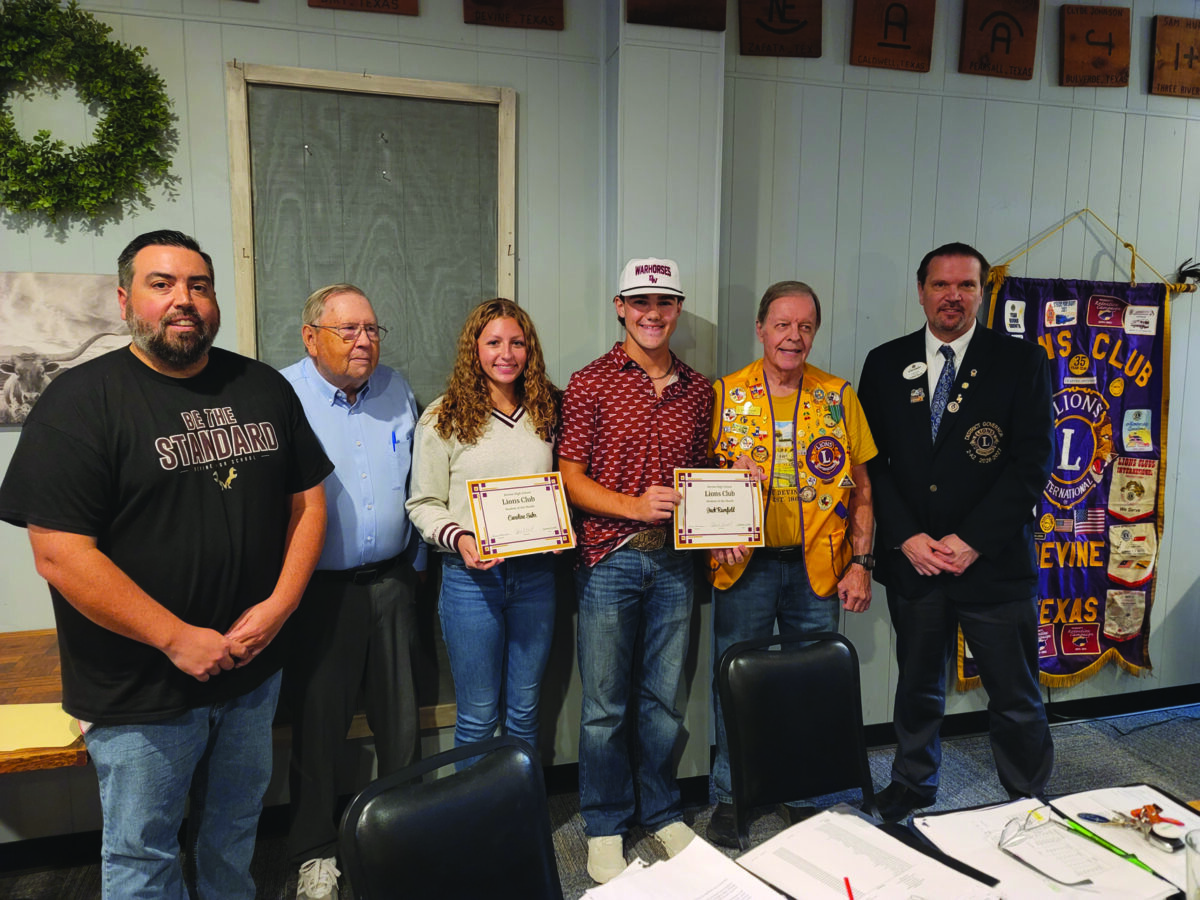
Lions Club Students of the Month are Caroline Suhr and Jack Rumfield. Pictured are DHS Principal Michael Gomez, Lion VP Bill Herring, DHS Students of the month Caroline Suhr and Jack Rumfield, Lion President Lewis Stroud and Lion District 2-A2 District Governor Jeffrey Almoney. The students of the month are chosen by the faculty at Devine High School.
“Homecoming games are October 16, and this year we are bringing back the Homecoming Dance, and of course the Bonfire”, said Principal Gomez.

Devine High School students Caroline Suhr and Jack Rumfield were honored as Students of the Month at a recent Devine Lions Club meeting. Both are seniors at DHS.
Caroline Suhr
Caroline has been a member of the Varsity Track Team all four years, competing as a pole vaulter. She qualified for Area her sophomore and junior years and advanced to Regionals her junior year. She also played JV basketball her freshman year and varsity basketball her sophomore and junior years. During her basketball career, she was selected as 2nd Team All-District, received the Arabian Heart & Hustle Award, and earned Academic All-District honors. Caroline was involved in FFA her freshman and junior years and competed on the Veterinary Science team as a freshman. Through her Agriculture courses, she also earned her Veterinary Technician Certification. She has been a member of the UIL Accounting Team, advancing to Regionals her freshman, sophomore, and junior years. She has been in band all four years. She plays flute and has served in numerous leadership roles in the band, including Quartermaster and Section Drum Major. She has also been a class officer all four years serving as Student Council Representative for the Class of 2027. She has been involved in Student Council for three years and served as Parliamentarian her sophomore and junior years. She currently serves as President of the National Honor Society.
Caroline is also dedicated to serving her community. She volunteers with Wreaths Across America and Hoops for Heart and enjoys volunteering at the middle school track meet, where she helps run the middle school pole vault event. She has also volunteered at a veterinary clinic during the summer.
Caroline will be attending Texas A&M University in College Station and majoring in Biology while fulfilling her pre-medical requirements. She plans to pursue a career in medicine and continue her commitment to leadership, service, and helping others.
Caroline is the daughter of Johnny and Nicole Suhr.
Jack Rumfiled
Jack Rumfield is a senior at Devine High School and the son of Joey and Michele Rumfield. Throughtout his high school years, Jack has enjoyed being involved in many areas of school life and giving back to the organizations and community that have given so much to him.
Jack currently serves as President of the Devine FFA Chapter, after previously serving as Vice President and Reporter. He has also had the honor of serving as the Revaldina District FFA Vice President. In addition, Jack has represented his classmates as the Class of 2027 Treasurer throughout all four years of high school.
Along with his leadership roles, Jack is a member of the National Honor Society and a member of the varsity football and basketball teams. Whether he is in the classroom, on the football field, on the basketball court, or representing FFA, Jack is proud to be a Devine Warhorse.
After graduation, Jack plans to attend Texas A&M University and major in Agribusiness. He looks forward to building on the leadership skills, experiences, and love of agriculture he has developed throughout high school as he begins this next chapter.
Jack is grateful for the friendships, experiences, and opportunities Devine High School has given him throughout the past four years. He is thankful for the teachers, coaches, advisors, classmates, and community members who have supported and encouraged him along the way, and he is honored to be recognized as Student of the Month.

Museum Bake Salea Sweet Success

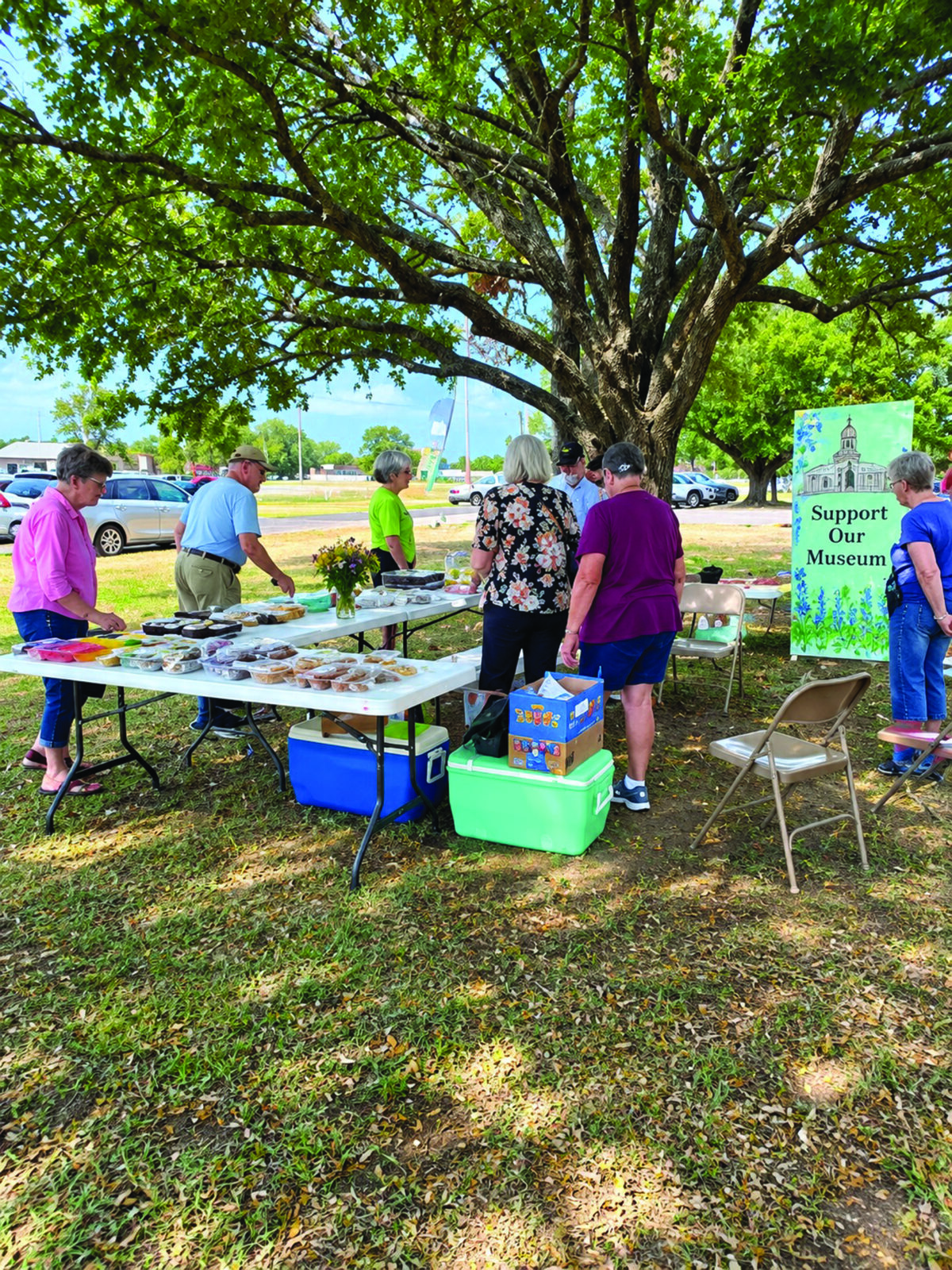
The community came together in a big way to support the museum at its recent bake sale, proving once again that a good cause—and a table full of homemade treats—can bring people together.
Hikers, county judges, artists, local residents and even a mayor stopped by to show their support and help raise funds for a new, more visible sign for the museum.
The new sign will make sure the museum gets the attention it deserves and help visitors and residents alike know exactly where to find it.
With the community’s generous support, the museum is one step closer to putting up that new sign. And once it’s installed, no one will be able to say they didn’t know there was a museum in Hondo!
The museum extends a heartfelt thank-you to everyone who baked, bought, donated, volunteered or simply stopped by to lend their support. It was truly a sweet success!

Leaving a new Legacy in Warhorse football

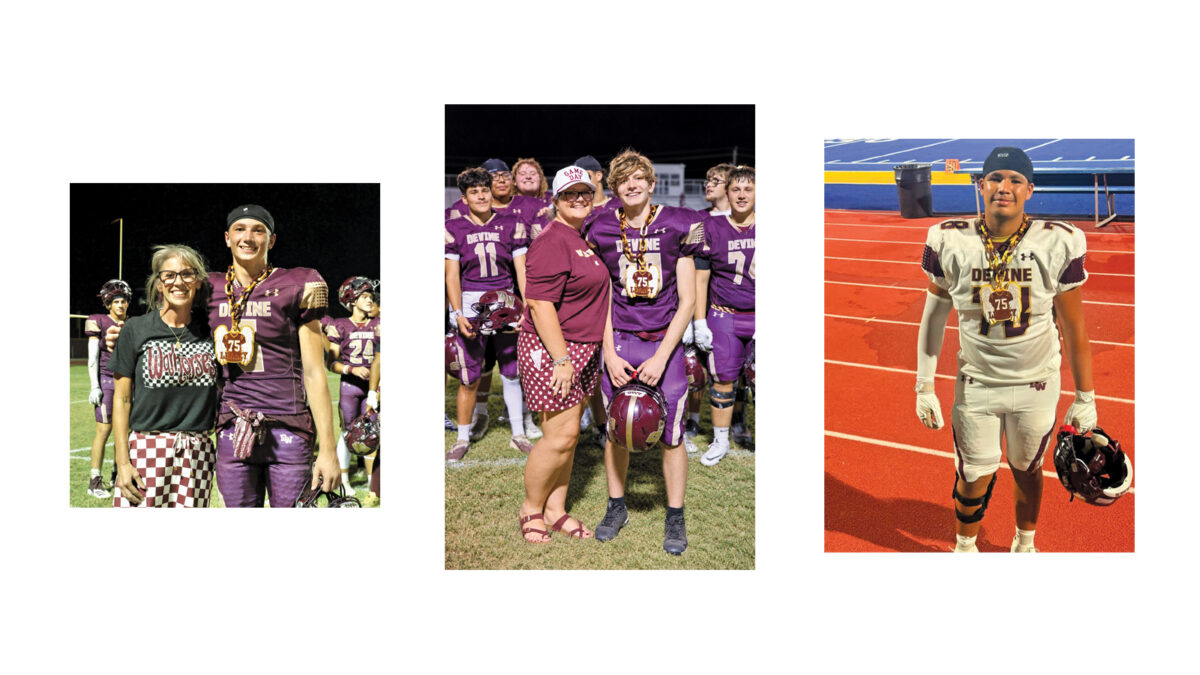
Recipients of the Legacy Award so far: #78 Aiden Martinez, #80 Jett Toner, #5 Brody Lane. All of these Warhorses have displayed heart, compassion and resilience, regardless of what their stats were. They truly are, living like coach Sanchez.

Matthew “Moose” Lopez
Sports Editor
Warhorse football has been off to a hot start this season. New head coach, new offensive system and new play callers have rejuvenated this Devine squad. However, that’s not the only new addition to the team. A new tradition has taken shape in honor of the late great coach Jacob Sanchez.
Sanchez was just 35 years old when he passed on January 5, 2023. He was a beloved member the community, father, husband, brother, son, teacher and coach.. He was also a Warhorse himself, wearing number 75 for varsity. He taught 6th and 8th grade science and coached football, basketball, and track in field for DMS, so many of his former students/athletes are still playing in Devine athletics today.
Brigid Howard, part-time sub and photographer for Devine ISD, took it upon herself to commemorate Sanchez with the Legacy Award. An honor bestowed upon a different Warhorse every week, not just for their play on the field, but for being the kind of teammate and the kind of young man people remember.
This award is meant to exemplify Sanchez’s values and by the end of the season the goal is to have the boys understand that earning it speaks to their caliber of character not just their success as an athlete.
“Maybe he helps a teammate up. Maybe he encourages someone after a bad play. Maybe he keeps fighting when the game gets tough,” Howard explained. “It doesn’t have to be the kid who scores the touchdown or gets his name called.”
This year’s crop of Horses consists of the last two teams Sanchez had coached. Howard’s son, varsity center Canton Urrabazo, was coached by Sanchez in middle school. He meant a lot to the senior linemen, which speaks to how much of a lasting impression Sanchez’s teachings made on his students and players.
“Coach Sanchez was so much more than a football coach,” Howard said. “He was known for supporting the underdog, making everyone feel welcome, and believing in kids who sometimes just needed someone to believe in them.”
Every game Howard selects a mom in the crowd to watch closely for the player that shows extraordinary effort, valor, heart and character on the field. The only rule being, she cannot select her own son.
After the game, the player is presented with a gold chain with a #75 jersey, Sanchez’s number in high school, to highlight the moments of sincerity and motivation he displayed throughout the game.
Since his passing, the kids have adopted a saying to honor their late mentor. A saying emboldens what it means to live up to the values that Sanchez set. To play with effort, lead with courage and lift up others. To live like coach Sanchez.

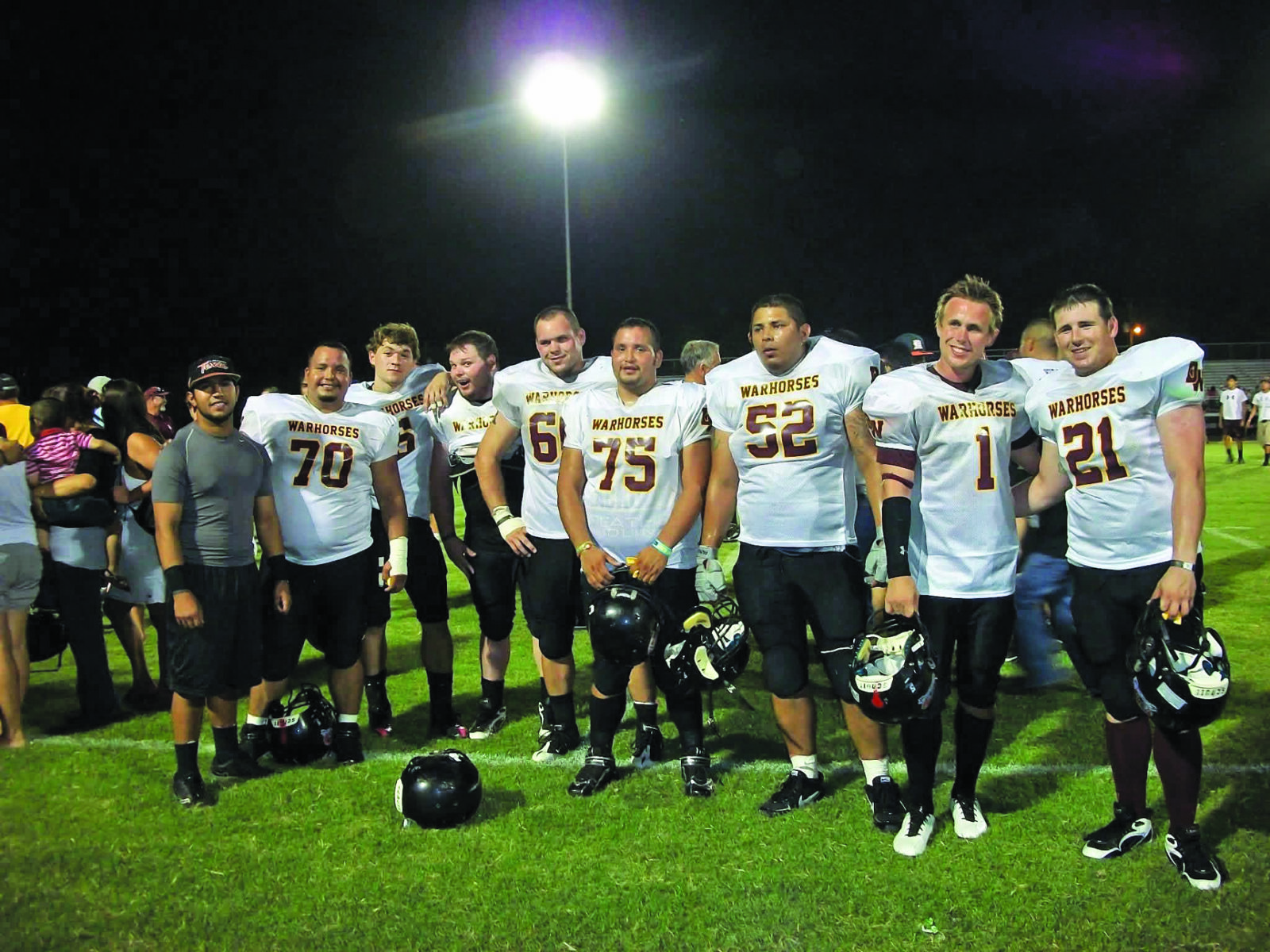
Jacob is #75 in the middle.

New World screwworm prevention efforts and related operational updates

As part of preventative efforts to stop the northward spread of NWS, USDA has established a new sterile fly dispersal area (polygon) that will extend approximately 50 miles into Texas along the U.S. border with Tamaulipas, Mexico. While NWS has not been detected in Texas, South Texas landowners may observe preventative sterile fly deployments in their area.
Sterile NWS flies do not cause infestations and are a proven, safe tool used to suppress NWS populations by reducing egg production. These deployments may not be noticeable during day-to-day operations, but targeted aerial and ground dispersals are a critical component of an effective NWS prevention strategy.
We are currently awaiting further guidance from USDA and TAHC regarding the specific timeline for sterile fly dispersals in Texas. We have also formally requested that landowners be notified in advance of any aerial or ground-based sterile fly deployments, so producers are aware of activity occurring on or near their operations.
Operationally, Moore Air Base is scheduled to receive its first shipment of NWS pupae on Monday, February 2nd to test dispersal systems. Following this test phase, the dispersal facility is expected to be fully operational within the next two to three weeks. On the production side, Mexico’s NWS facility is projected to reach a capacity of approximately 100 million sterile flies by the end of the year. Additionally, groundbreaking on the production facility at Moore Air Base is scheduled for March 2026, with completion currently anticipated in 2027.
Texas & Southwestern Cattle Raisers Association will continue to monitor developments closely and share updates as more information becomes available.
Source: TSCRA.org

Shortage of rural vets endangering the nation’s food supply

By Justin Welsh
America is facing a food system shortage. Livestock veterinarians are the new endangered species. Farmers are losing access to the experts they need to keep our food supply safe.
More than 500 U.S. counties across 46 states are federally designated veterinary shortage areas. Just 1.3% of registered veterinarians specialize in food animal practice. This frontline workforce is fraying at a time when U.S. farms produce over 94% of all red meat and poultry Americans consume.
Addressing this growing concern will require sustained industry investment in education that makes veterinary careers more accessible, in recruitment efforts that prioritize rural areas, and in hands-on training that adequately prepares the next generation.
Food animal veterinarians are the unsung heroes of American agriculture. They inspect livestock, administer vaccines, and provide critical guidance on herd health. They support the viability of family farms, local economies, and the safety of the food on our tables.
Yet the United States has lost 90% of food animal veterinarians since the 1950s. And the number of these critical vets continues to decline.
For one, the cost of veterinary education is prohibitive. New graduates leave school with an average debt load of about $150,000. For those called to food animal practice, that financial burden is often compounded by lower pay than they could expect to earn in clinics that focus on companion animals.
Then there’s…LOGIN TO CONTINUE READING at www.devinenewsmembers.com. You will get instant access to our full E-edition, and begin getting the newspaper delivered to your home next week for $36 a year in Medina County. Support important local city, county, and school news like this!

‘Beauty bias’ strongly shapes who we view as leaders

By Emma Lawson, Texas A&M University Division of Marketing and Communications
New research shows physical attractiveness is one of the first qualities used to determine leadership skills. Read online
BRYAN-COLLEGE STATION, Nov. 26, 2025 — According to a new Texas A&M University study, physical attractiveness has a measurable — and surprisingly strong — effect on who’s viewed as leadership material, influencing decisions across industries and institutions.
The findings, based on a meta-analysis of 65 pre-existing studies, confirm that the “beauty bias,” a term often used to describe situations where attractive people gain advantages based on looks alone, plays a significant role in who is chosen for leadership roles in classrooms, companies and executive suites. Published in the Journal of Management, the paper co-authored by Dr. Stephen Courtright, professor of management at Texas A&M’s Mays Business School and director of the Flippen Leadership Institute at Mays, concludes that physical attractiveness is consistently linked to perceived warmth and competence, in turn influencing who is seen as a leader.
“What we find is that people lend a lot of credence to good looks when they’re selecting leaders, even though good looks have no effect on leader effectiveness whatsoever,” Courtright said. “And the reason we fall into this beauty bias is because we assume that better looking people are more caring and competent — which also isn’t the case based on past research.”
The tendency to associate attractiveness with perceived warmth may explain why certain individuals are perceived as leaders before they’ve demonstrated their skills or experience. Courtright, whose research focuses on organizational leadership, teamwork and work-family dynamics, said that people subconsciously associate attractiveness with having strong people skills and intellect.
One famous example: the 1960 presidential debates between candidates Richard Nixon and John F. Kennedy. Viewers who watched on television overwhelmingly favored Kennedy’s youthful, charismatic and suave appearance, while radio listeners preferred Nixon.
“Essentially, in the face of limited information, we use physical attractiveness as an indicator of the key skills we want in leaders — namely, being smart and being good with people,” he said. “And it doesn’t matter if you’re an executive, a politician, a frontline manager or a college student. We find that the beauty bias is very common and more pervasive than what we originally thought.”
To quantify the beauty bias, Courtright and his colleagues empirically analyzed dozens of pre-existing studies conducted by social scientists after reviewing more than 1,000 research articles exploring how physical traits relate to organizational outcomes. Their goal was to identify how attractiveness specifically influences perceptions of who should become a leader — and whether that influence differs by gender, culture, work experience, and other factors.
The results show that this link is not only real, but sizeable. Compared with gender, personality traits, or IQ, physical attractiveness was a stronger predictor of who is seen as a leader. Furthermore, the beauty bias was equally strong for men and women — meaning both could be unfairly helped or hurt by it – and it was consistent across different contexts and cultures.
The good news is that while physical attractiveness heavily shapes early impressions of leadership potential, it has no impact on actual leadership capabilities, Courtright said. Over time, teams begin to value qualities that determine leadership success — like knowledge and empathy ­ far more than appearance.
Hiring managers can also use well-defined and valid criteria when determining leadership potential so they can avoid promoting unqualified individuals to leadership positions, Courtright said.
“You can’t control some things about attractiveness other than ‘dressing the part,’ but what you can control is how much you can connect with people and gain competence as a leader. Ultimately, that’s what makes the most difference in becoming a successful leader: Can you do your job well, and are you good with people? If you have those two down, you have the skills needed to be a great leader, no matter what your level of attractiveness might be,” he said.

“Caitlin’s Christmas Lights” Competition 2025

It’s time to light up our community and be sure to enter the Christmas light contest held each year in loving memory of the late Caitlin Jaworowski, to help other families now battling cancer.  The entry fee is simply a donation, and anyone can enter, with the grand prize winner getting a $250 gift card!!!!

The deadline to enter is December 20, and please make sure your lights are on the evenings of December 21-22nd as the family will be coming around for judging.

PRIZES

The 1st prize winner will receive $250 donated by Country Gals, and the 2nd prize winner will receive $150 donated by 2 Bar Ag Services, plus, several other small awards will be given for separate categories.  

DONATE

If you don’t want to enter the contest, please remember we are a non-profit organization operating year-round, so your donations are what will help us help others who are dealing with cancer.  

ENTER LIGHTS CONTEST

Sign up in person at Country Gal’s Market located at 109 W. Benton Ave, Devine, TX 78016 or call Justin Jaworowski 210-275-9025.

About us:

We are a 501c non-profit organization dedicated to raising money for individuals and families dealing with cancer. Our goal is to help alleviate some financial burdens, allowing them to focus on their health, family and healing.  

Justin Jaworowski states, “When my wife Caitlin was diagnosed with cancer 4 years ago, our community, family and friends came together in this very same way to help us. I created this non-profit organization to honor her and her fight with cancer.  The support of local community can really help take some of the burden off and this is our goal here at Caitlin’s Christmas Lights.”  

Our lights contest is our primary fundraiser.   Entry is a minimum of $10 to enter your light display.  

Texas Deer Numbers Stay Strong

Quinn Coleman, 14 of Devine, with a nice buck she harvested at the Anderson Ranch in Dilley, TX.

Oct. 31, 2025
AUSTIN — To hunters, springtime in Texas is often viewed as chasing turkeys through hot, humid weather, or hanging up the firearm for a fishing pole. For white-tailed deer, spring represents a time for growth: body growth, antler growth and population growth.
Texas began the growing season under widespread drought in March, but most of the state received much-needed rain in late spring. Where it rained, plant growth boosted antler development in bucks and allowed does to load up on calories for birth and nursing.
Rain came late to the Edwards Plateau and South Texas, but while summer rainfall helped lower temperatures and allowed for a late season green-up that benefited fawn survival, it was too late to greatly benefit antler development in those regions.
The general deer season kicks off Nov. 1 and runs through Jan. 4, 2026, in the North Zone and through Jan. 18, 2026, in the South Zone, giving folks plenty of chances to go from field to table with their harvest.
Hunters taking advantage of Texas public hunting lands must have an Annual Public Hunting Permit. It’s also important for public land hunters to consult the Public Hunting Lands Map Booklet to review regulations that may apply to specific areas. The Texas Hunt & Fish app can be used to complete on-site registration electronically at a public hunting area.

Ecoregion Highlights
The Cross Timbers in North Texas has the second highest deer population in the state and will offer hunters plenty of opportunities to harvest mature bucks.
Despite what seems like lasting spring drought conditions, the Edwards Plateau is a great deer hunting region for those looking for quality animals. It consistently has the highest hunter success rates in Texas. The catastrophic Hill Country floods may have had local impacts on fawns near river and stream channels, but most deer were able to reach higher ground.
Post Oak Savannah hunters can expect a great season of chasing mature bucks thanks to good fawn survival in previous years.
In the Pineywoods, Texas Parks and Wildlife Department (TPWD) biologists work with landowners and timber companies to restore and maintain quality deer habitat, which has helped sustain deer populations.
White-tailed deer population growth in the Rolling Plains in recent years has made the area a hotbed for mature bucks, and another great season is expected.
The South Texas Plains are known for mature bucks with above-average antlers. For hunters looking for a once-in-a-lifetime trophy, South Texas is often seen as the premier big buck destination.
For a detailed white-tailed deer forecast by ecological region, visit the White-tailed Deer Management page on the TPWD website.

Good Habitat Management Creates Harvest Opportunities
For many landowners and hunters, deer management doesn’t begin when the season opens. Healthy deer rely on good habitat and herd management, as well as spring rains from Mother Nature. By properly managing the land throughout the year, landowners are setting the stage for a successful deer season.
Antler growth is directly related to rainfall between April and June, and the improved habitat that follows. This year, hunters should see slightly above-average to average antler quality for most of the state. The Edwards Plateau and South Texas should expect slightly below-average to average antler quality since they missed out on spring rain. The Pineywoods, portions of the Post Oak Savannah and Cross Timbers received timely spring rains and should see above-average antler quality.
Much-needed summer rain and mild weather helped more fawns survive this year. Ranches that manage deer populations through hunting and improving native habitat will see steady improvements over time.

Protecting Texas Wildlife
Texans enjoying the outdoors are the first line of defense in protecting wildlife, livestock and humans from diseases that could have devastating effects.

New World Screwworm
New World screwworms (NWS) are parasitic flies that lay eggs in open wounds or moist body parts, such as those located in the nostrils, eyes or mouths, of live warm-blooded animals. These eggs hatch into a type of parasitic larvae (maggots) that only feed on living tissue, while other species of fly larvae prefer dead or rotting tissue. NWS larvae burrow or “screw” into living tissue with sharp mouth hooks, giving them a screw-like appearance. Infested wounds quickly become infected and, if left untreated, will kill the animal.
If you see LIVE animals with maggots, report it to your local TPWD wildlife biologist. Early detection is key. Do not delay if you suspect an NWS infestation. Reporting is crucial to response efforts and the eradication of NWS.
For more information, visit https://tpwd.texas.gov/screwworm.

Chronic Wasting Disease update
Landowners and hunters play an important role in managing Chronic Wasting Disease (CWD) and can reduce its impact by managing populations, properly discarding unused carcass parts, reporting sick deer and voluntarily testing.
Hunters are reminded to review the TPWD website and Outdoor Annual app to review this year’s season dates, bag limits and information about proper carcass disposal. Hunters following these regulations are allowed to debone carcasses to help prevent the accidental spread of wildlife diseases.
More information about carcass disposal regulations, voluntary sampling, check station dates and hours of operations can be found on TPWD’s CWD web page.