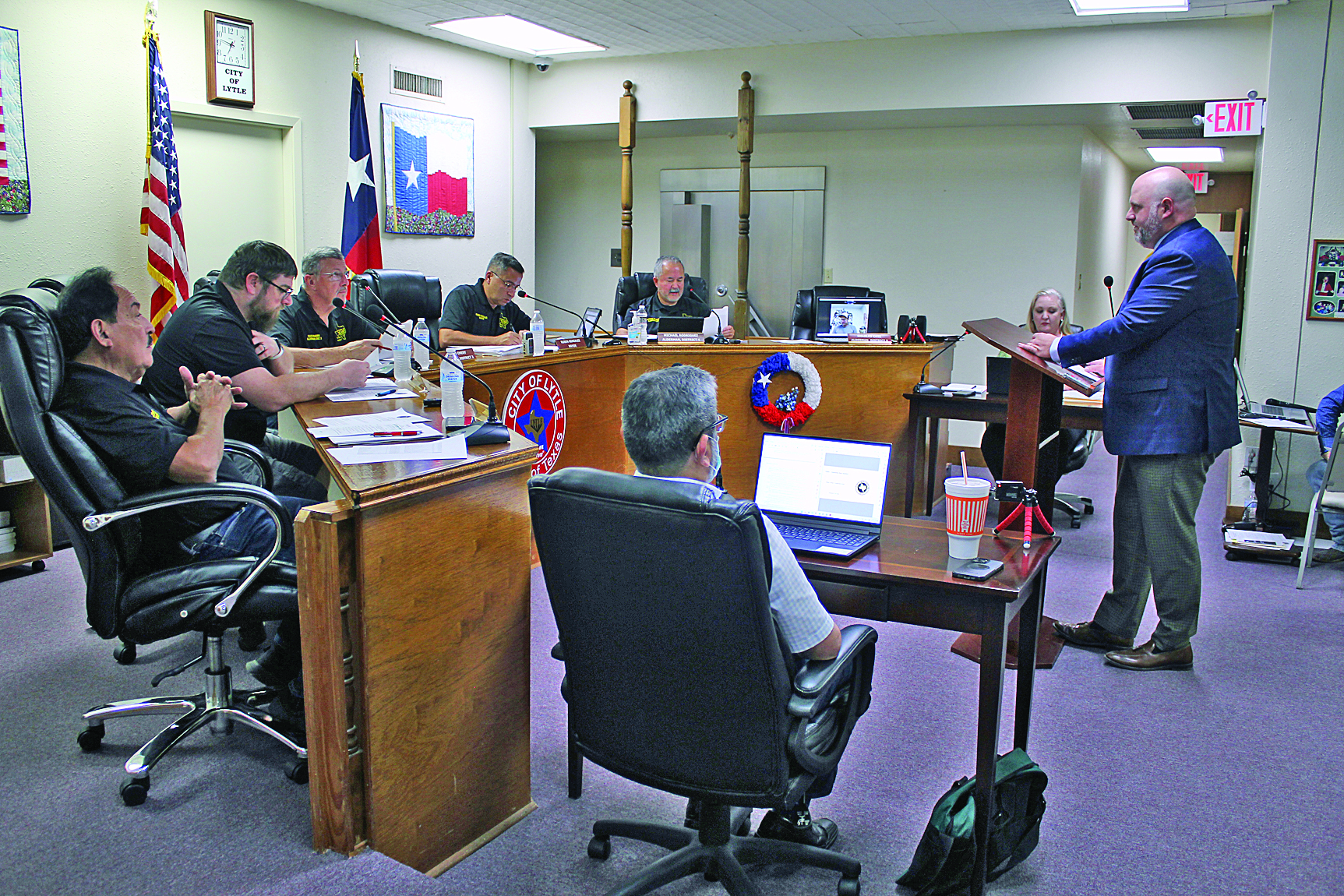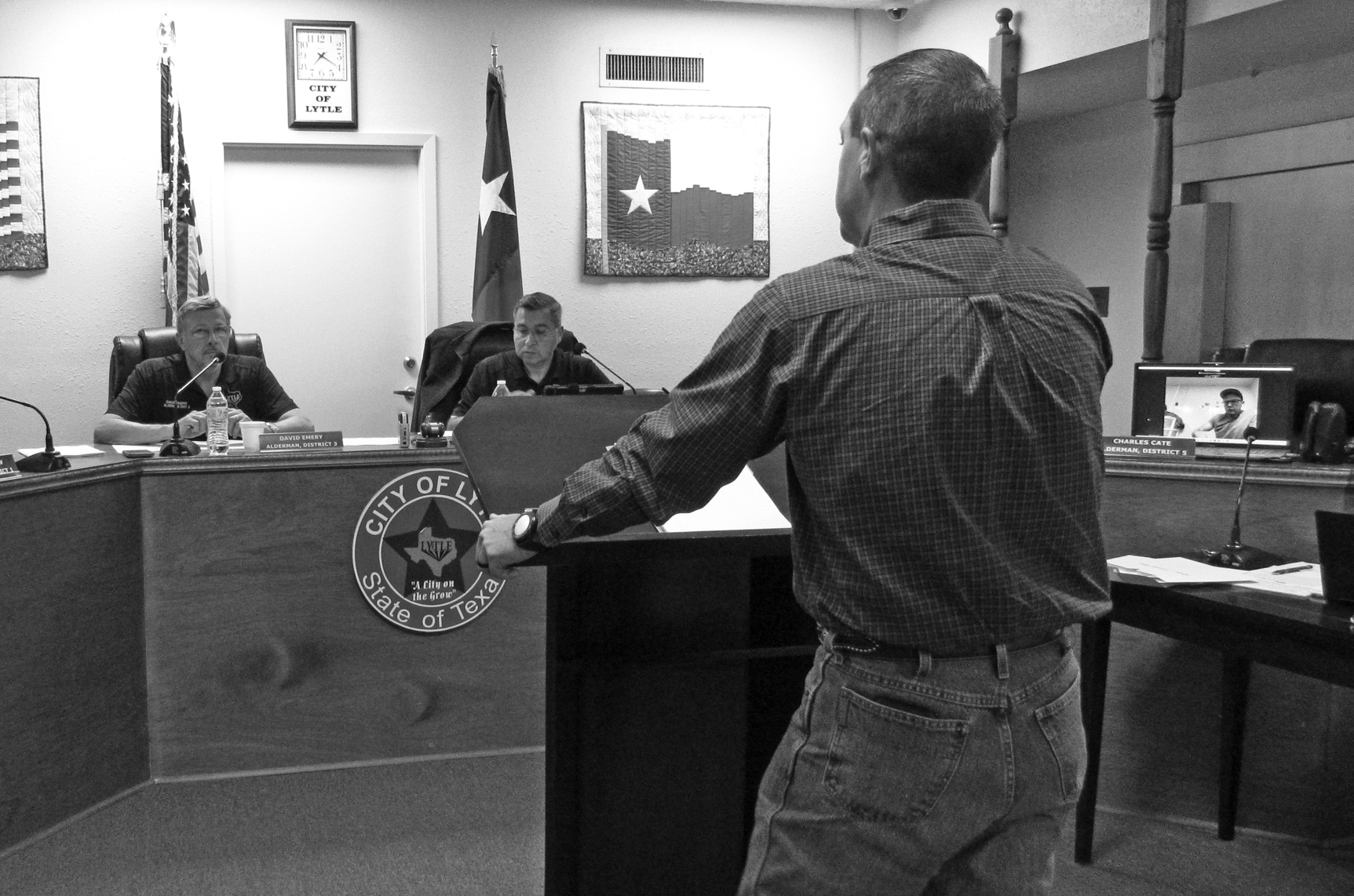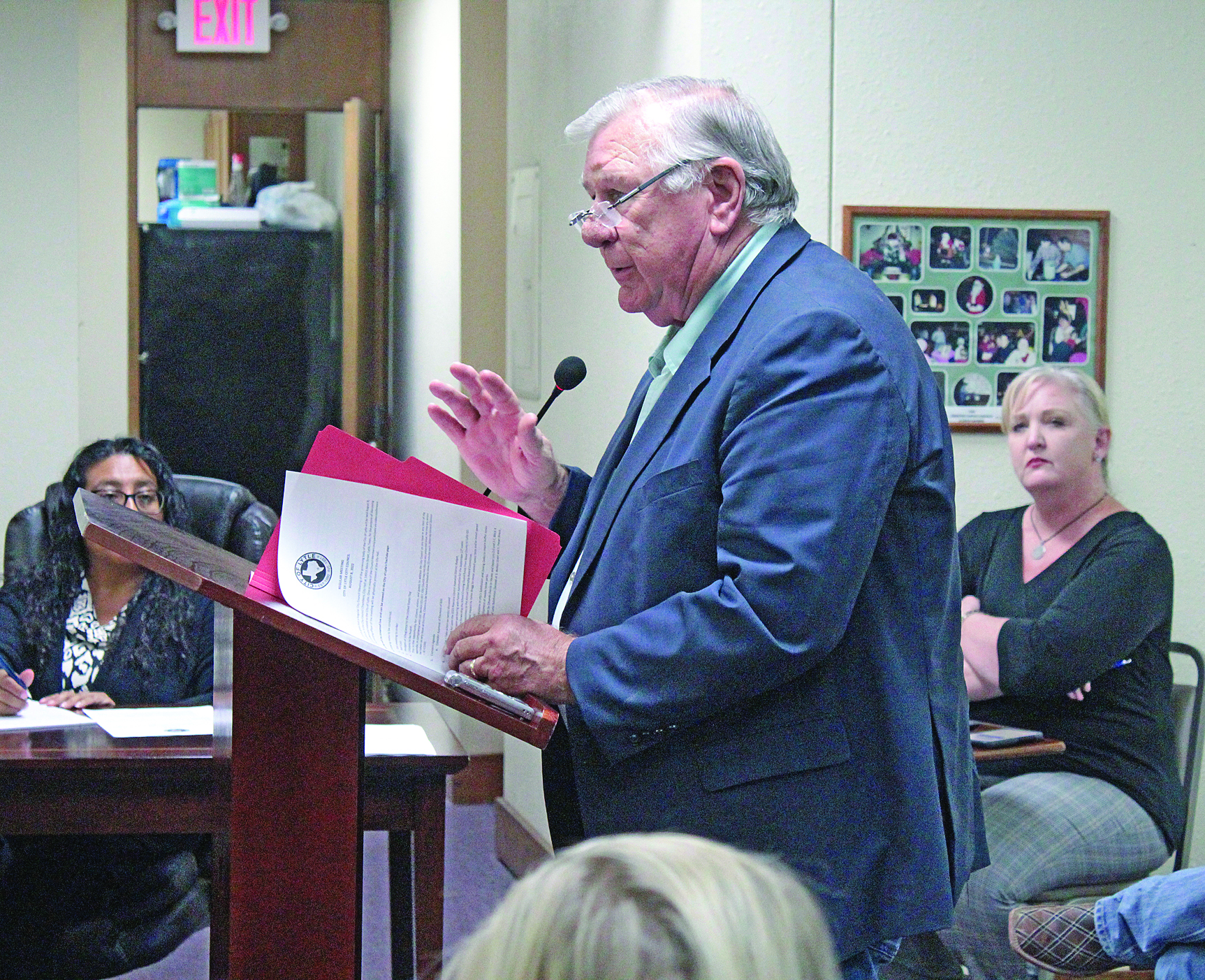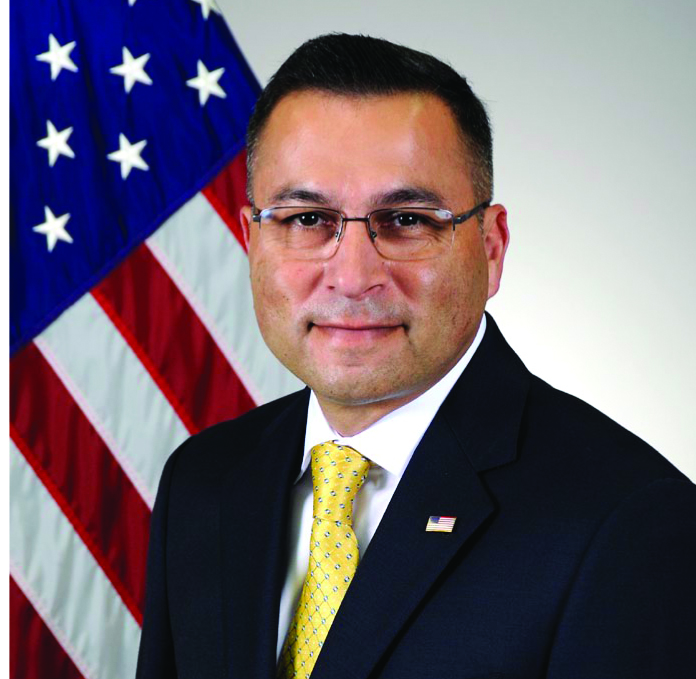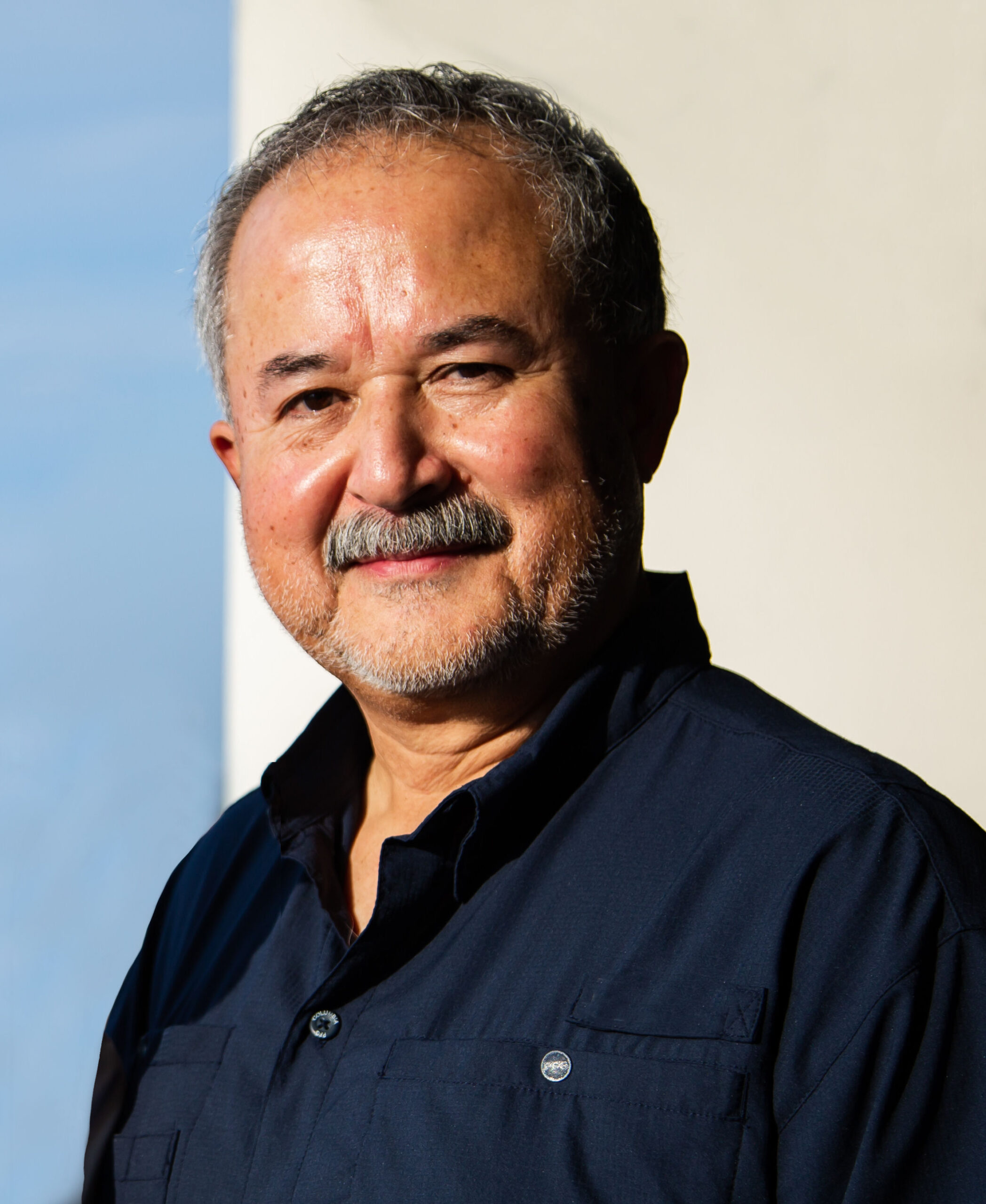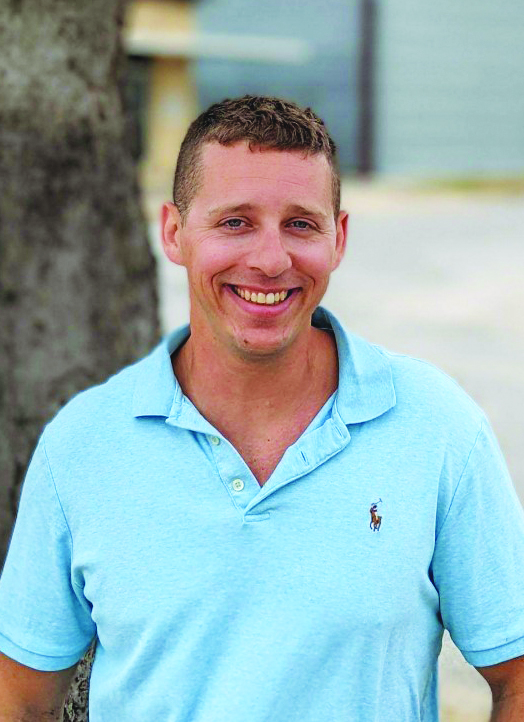
Atascosa County Precinct 2 Commissioner Stuart J. Knowlton speaks to Lytle City Council about the appraisal budget increase that has been proposed.
By Anton Riecher Members of the Lytle City Council voted unanimously Monday, August 8, to join with the Atascosa County Commissioners Court in rejecting a proposed 2022-2023 budget for the Atascosa Central Appraisal District that proposed a 12 percent increase from last year. District 3 Alderman David Emery made the motion that was seconded by District 1 Alderman Joseph Morrow. “I trust our county commissioners and the county judge,” Emery said. “I know they have looked at this and the county auditor has discussed it in quite a bit of detail. We have a little time and I think we need to send it back and let them start again.” The 2022-2023 proposed budget submitted presented to the ACAD board in July totaled $2.104 million, a 19.4 percent increase over the previous year. The budget proposal was narrowly defeated five votes to four by the board. After further revision, the ACAD board approved a proposal calling for a 12 percent budget increase. However, when submitted to the various taxing entities involved, the commissioners voted to reject the proposal, chiefly, Precinct 2 Commissioner Stuart J. Knowlton explained to the city council. ACAD is responsible for appraising approximately 72,000 parcels of property, Knowlton said. But nearly half of those parcels involve mineral development and are appraised by an outside firm rather than ACAD. The remaining 42,000 to 46,000 parcels are comparable to the entire workload in either Medina or Wilson counties, Knowlton said. The main bone of contention is the hiring of an additional tax appraiser called for in the latest budget. “Those counties operate with fewer staff that we do,” he said. Although Knowlton, who serves on the ACAD board as chairman of the building committee, voted to approve the budget submitted to the commissioners, he told the city council that he voted against the proposal at the commissioner court meeting earlier Monday. As a counter proposal, Atascosa County Judge Robert Hurley and Tracy Barrera are suggesting an eight percent increase over the previous year’s ACAD budget, Knowlton said. “We have no issue with the raises for employees,” he said. “Several of their employees, the clerical staff, were way below what it should have been.” Kimberly Faulk, who represents the city of Lytle and the Lytle ISD on the appraisal board, also appeared before the city council. She said that the most significant raises in the budget represented supervisory personnel. However, Alderman Emery noted that an appraisal district deed clerk would receive a pay hike from $32,000 to $43,000 in the latest version of the budget. “Seems like quite a big jump in one year,” Emery said. “It might be better to break that up over a couple of years. We’d all like to get a 35 percent increase in our salary.” Lytle Salaries Salary increases for the Lytle city positions of finance director, city secretary and city administrator also received attention from the council. On a motion by Emery, seconded by Morrow, the council immediately increased the finance director’s salary to $70,000 a year, the city secretary to $55,000 a year and the city administrator to $90,000 a year, as called for in the 2022-2023 city budget. City Administrator Matt Dear explained that the finance director completed her probationary period on May 3 without receiving the customary nominal salary increase. The city secretary was permanently appointed in June but without a change from hourly employee to salaried. As for Dear himself, moving to his full salary required the council to wave three months of his probationary period. Mayor Ruben Gonzalez explained that the salary increases would have no fiscal impact since a recent retirement left the salary fund with enough to cover the amount and still show a surplus. “One of the reasons we are putting it on here is they have done a great job of getting us to where we are right now,” Gonzalez said. Subdivision Rules A motion by Emery to explore possible revisions to the city’s subdivision and zoning codes to require buffer zone and other requirements for the development of mobile home parks was approved by the city council. At issue are plans for a 170-plus lot mobile home park near Martin Street to be called Harris Park. Tammy McDonald and other residents on Martin Street let the council know their concerns. “Our city is not ready for this many homes,” McDonald said. “The city council should consider the restriction we have put on other developers’ subdivisions.” Specifically, she said she was concerned with the space permitted between homes and other buffer areas. Acknowledging that the council rezoned the property for this type of development nearly 25 year ago, McDonald said she was concerned about how the mobile home park would affect the value of her property. Jolinda Harris of Harris Western, Inc. told the council that only new homes meeting federal standards will be allowed in Harris Park. All will be individually owned with no rented mobile homes allowed, she said. “The only thing that is going to be rented is the lot,” Harris said. All residents will be fully vetted including a credit check and a check for criminal background, she said. “I’m not sure other subdivisions do that but we do,” Harris said. She also objected to calling Harris Park “a trailer park.” “These are really not trailers,” Harris said. “These are homes built in a factory and moved already built.” Harris’ father, George Harris, who developed his first mobile home park in Lytle nearly 50 years ago, took issue with the argument that the new mobile home park will have a negative impact on the local tax base. “They raised the taxes on units that belong to me almost $100,000 last year,” Harris said. “Since last year they raised it $200,000 above that.” Speed limits In other action, the council approved motion to revise proposed speed limits and install speed bumps on Lytle-Somerset Street. The motion by Morrow, seconded by Rodriguez, called for the city to investigation alternatives to speed bumps to better control speeding in that area. Crossing guard On a motion by Rodriguez, seconded by Emery, the council approved to $6,600 to cover last year’s contribution to Lytle ISD from the Bexar County School Crossing Guard fund. Memorial event Also, the council voted to partner with Patriot Automotive for the city’s September 11 memorial event. “It’s going to be a great event for our first responders,” Gonzalez said. 3 nominated for Citizenship Award committee The city council voted to nominate three appointees to the city’s Annual Citizenship Award Committee. Morrow nominated Margaret Wilson while Emery put forward the name of Robin Cantu. District 4 Alderman Michael Rodriguez put Eva DeLeon in nomination. Two additional nominees are pending.
With agenda intended on streamlining city leadership roles, projects and procedures, the Lytle city council passed all but one tabled item during Monday night’s four and a half hour meeting.
Gonzalez re-elected Lytle Mayor, Rodriguez to council, Ritchey wins Devine City Council seat, Davis and Frieda re-elected to Devine ISD board
City of Lytle… Mayor Ruben Gonzalez was re-elected with 363 votes to challenger Tom Cate with 174. Michael Rodriguez won the District 4 Alderman race 50 to 21 over Marshall Witter. District 5 Charles Cate was unopposed.
Ruben Gonzalez was re-elected Mayor for the City of Lytle.Michael Rodriguez was elected to Lytle City Council.
City of Devine Josh Ritchey won the District 5 seat with 39 votes over Cassandra Maldonado 15 and Wilburn Woody Woodrow 3 votes. Councilman D1 Rufino Vega and D3 David Espinosa were unopposed.
Josh Ritchey was elected to Devine City Council.
Devine ISD Trustees Chris Davis and Renee Frieda were re-elected to their At Large seats over challenger Brenda Burford. Davis had 246 votes, Frieda 206 and Burford 95. Trustees SD1- Ali Buvinghausen and SD2-Carl Brown were unopposed.
Renee Frieda was re-elected to the Devine ISD school board.Chris Davis was re-elected to the Devine ISD school board.
Four different elections are taking place this Saturday, May 7, 2022 in our area. City of Devine voters in District 4 can vote, all voters in Devine ISD can vote, and all voters in the City of Lytle can vote in those elections. Statewide all voters can vote in the Special Constitutional Amendment elections hosted in their county.
On April 11th, the Lytle City Council was held at 6:30pm. Starting with the pledge of allegiance, the meeting included a discussion on street names and the history behind the street name that the city recently removed/replaced.
City Councilman Sam Cortez, City Council Alderman Charles Cate, Coach Gilbert Ruiz, Coach Hadley Foster, Mayor Ruben Gonzalez and City Councilman David Emery stand beneath the newly unveiled Ruiz-Foster Way street sign.
On Friday, April 8, 2022, at the intersection Easy St. and Laredo St. in front of Lytle ISD’s Walter H. Joyce, Jr. Stadium, a crowd of more than 100 people gathered to honor and celebrate two Lytle ISD coaches, Hadley Foster and Gilbert Ruiz.
The March 28th Lytle city council meeting began with the pledge of allegiance at 6:30pm. All were present for the meeting including Joseph Morrow, Alderman District 1; Sam Cortez, Alderman District 2; David Emery, Alderman District 3; Jerry Stone, Alderman of District 4; Charles Cate, Alderman District 5 and Mayor Ruben Gonzalez. The meeting included continued discussions of the creation of an emergency plan for Lytle City, the authorization of the issuance of the City’s General obligation refunding bonds and the extension of building permits for two construction projects. Levying an annual property tax The meeting started off with the discussion of taking action on an ordinance authorizing the issuance of the City’s General Obligation refunding bonds, series 2022. The authorization of this ordinance would levy an annual ‘ad valorem tax’ or property for the payment of the bonds. Andrew Friedman, Managing Director at SAMCO Capital Markets, stepped up to represent Lytle City as their financial advisor and headed the discussions with thorough explanations on the situation at hand. “Been a month since we briefed you on the refunding opportunity,” Friedman said. “You gave us a green light to proceed and to see if we could refinance this debt without extending its amortization and save a little bit of money for the outstanding bond of the city or GO’s.” Publically, as of 2019 the city of Lytle had a nominal outstanding general obligation (GO) debt of $1, 270, 000, which is $414 per capita over the past ten years up to that point. The issue Friedman was attempting to address with the council. “We put this (GO debt) out for a competitive private placement bid to all of the banks locally and around the state and country that purchase municipal bonds to buy and to hold for the life of the bonds,” Friedman said. “One of the reasons for doing that rather than going out and doing a traditional bond underwriting as we did with the 2013 GOs that we’re funding right now is it’s a small amount, there’s less $960,000 in those obligations outstanding. So it’s an effort to save as much money as possible and keep costs as low as possible.” Friedman said they were going to be competitive about receiving these bids, only giving bidders that very day until noon an opportunity to reach out with plans to award to the lowest bidder “You can see we’ve received three bids,” Friedman said.“The best bid came from Amegy Bank at an interest rate of 2.79% percent. We had other bids from Truest and then TIB, The Independent Bank. So what you can see from here is that the winning bid is 2.79%. If we hadn’t gotten their bid, the best bid would have been 2.99%.” Despite finding a satisfying interest rate through their bids Friedman still had some concerns to share about those rates in the coming future as the city continued towards paying off the GO. “I’m sure anybody reading the news has seen that interest rates are going up,” Friedman said. “We’ve got inflation that continues to hammer away at the economy, the federal reserve has taken action and raised their federal funds rate, which is the base rate, and what that does is generally send interest rates higher. They also indicated last week when they did bump those interest rates up that they may do so many more times in 2022 as they try to get a handle on inflation.” Friedman said that he believes interest rates will likely continue to go up in the long term and that other economists also predict that the economy may also be heading towards a potential recession, another potential issue to be prepared for. “With all of that being said 2.79% was a higher interest rate than what we had looked at a month ago,” Friedman said. “We were hoping that interest rates weren’t going to go up quite as fast as they have been, but the refunding still works…But if we’re looking to go with the final interest rate of 2.79% we received today, we’ll save $630,556 between now and 2033. So you can see on that table on the right side that the annual savings will be between $7000 and $5000 a year over the next several years.” Happy with this number, the council accepted the bid and approved an ordinance authorizing the issuance of the City’s General Obligation refunding bonds. Re-zoning of Lytle Farms Property Moving on, the council then addressed a recommendationfrom the zoning committee on the re-zoning of Lytle Farms property. Emilie Weissler, Director of Land Use and Development at Killen, Griffen&Farrimond stood before the council on behalf of the Lytle Farms developer and property owners to help discuss the recommendation of the zoning committee on the properties re-zoning. “We are requesting your support for rezoning from r1 to v2 on the just over 40-acre parcel off of 2790,” Weissler said. “This is to facilitate commercial development along the frontage of 2790 and then a 99 duplex block development.” According to Weissler, the commercial development planned for that area would include a mix of neighborhood retail, medical offices, professional offices and small restaurants with the hopes of brining in new residents. The re-zoning was approved and the council moved onto their next item. Traffic Impact Analysis Ordinance A traffic impact analysis (TIA) is a study prepared to help gauge the possible impact a proposed development on the roadways and to determine if said roadways may need any improvements to maintain operation once the development is put in place. According to Alderman David Emery, Lytle City doesn’t require developers to get one of these before development yet, potentially opening doors to issues for the city down the line. “Right now, we do not have an ordinance that directs the developers to make improvements on the roads and the intersections adjacent to the properties they developed and other cities,” Alderman Emery said. “Most of the cities have this, so it’s important that we consider going out for bids to get an ordinance drawn up for us because developers, if they see we’re sitting down here with no ordinance and they jump in real quick and get all the approvals to build and develop, the roads may not be adequate to support the ingress and egress from these new communities.” Alderman Emery added that intersections are especially important in this, as they are a big point for traffic. “The ordinance would need to be written in such a way that they do surveys to count the number of additional vehicles moving past certain points at intersections,” Emery said. “Where they think the turning areas are and how much the new developments are going to increase this traffic to a certain degree.” Alderman Emery then invited Devin Simpson, P.E. Civil engineer at Kimley-Horn up to clean up a bit on his explanation. “You know, when you see development starting what your residents start to feel first is the pressures of traffic,” Simpson said. “And all the municipalities surrounding San Antonio, San Antonio itself…All these small municipalities usually what they’re late to getting to is requiring a traffic effect analysis from these developers. Simpson explained that having an ordinance requiring a TIA would just be one way of allowing the developers to take a little bit of responsibility of the traffic impact their developments may bring and negate these effects to whatever traffic rules the city decides to set for them. Using an example of how San Antonio set it’s traffic rules to only accept a 20% delay, she continued the conversation. “I’ll give you an example of how the city of San Antonio does … you’ve got to you know for the smallest level TIA you’ve got to study within a mile and a half of your site and if that intersection carries more than 76 peak hour trips, that’s talking about the am or the pm peak hour, if the impact of the intersection increases delay (of traffic) more than 20% they have to provide improvements to the intersection whether that be adding turn lanes or installing a traffic signal to mitigate it to get it back to that 20% threshold,” Simpson said. “All of that has to be within that roughly proportionate value (20%), so if they could only do one turn lane within that value that’s all they would do. If they could do, you know, everything they would do all of that. But it would all be determined by the city.” The council approved the request for proposals to develop a traffic impact analysis ordinance. Request for Qualified Engineering Firms The council then followed this up by approving the advertising for the request of qualified engineering firms to perform a review and diagnostic of the code of ordinances and policies. Once again, the topic was passed over to Simpson for further clarification. “Another thing we’ve been talking about is looking at your code more holistically, ” Simpson said. “Just with all the growth coming. Where are the holes at? You know, where are the things that need to start being improved upon, updated or just outdated information so we can start getting ahead of that.” Simpson further explained to the council that updating a code is a big endeavor that could take years and can be costly, so the best way for the city to go about addressing the code is to pinpoint and address the biggest priorities primarily. “I think we already called out the TIA ordinance being one of them,” Simpson said. “The zoning, that basically comes next. Then what after? Is it the plating procedure; is it your subdivision code? So just doing a holistic review of the code to figure out where you need to start kind of filling in holes may be the best answer for now.” Agreeing with her sentiment, Alderman Charles Cate then added his own reasons on why it would be a good idea to approve a review and diagnostic of the code. “My concern is that, provided our infrastructure is not where it needs to be here in the next two to three years, that as a city we’re able to mitigate (not that we necessarily want to prohibit it) but control and protect ourselves in the event that we say ‘hey, there are construction delays’ or whenever COVID 3.0 comes around or whatever,” Alderman Cate said. This action was approved. Request for variance on gas station sign height Victory Signs sent in a request for a variance on the height of their gas station sign off of the IH 35 and FM 3175 for the council to consider, setting their desired height limits to be somewhere around 75 and 80 feet tall. Concerned about how the overall look of the sign, height included, might affect the people living nearby it; Alderman Cate requested an artist rendition of the sign. “Do we have an artist’s conception of what that’s going to look like?” Alderman Cate said. “I mean, are we going to be able to see it from Lacoste? I mean, my concern is that we’ve got this sign glowing in the middle of the night; you know for people it’s going to be like a lighthouse. I get it. It’s going to be on the side of the highway, they’re trying to draw people in, but at the same time for me it’s the light pollution. People living out in the country, they don’t want to see some towering, monstrosity of a sign. So that’s my concern, I want to be able to know what it’s going to look like before we grant them a variance…” Agreeing with Alderman Cate the council voted instead to table the item until Victory Signs provided them with an artist rendition of what the sign would look like. Contract for Emergency Management Re-visting the Lytle City emergency plan once more, Cumorah Eldredge was next to stand before the council with a newly edited version of the contract ready to present. “I just want to remind the council we’re not here to approve the writing of the emergency plan,” Eldredge said. “It was done months ago by council so this is strictly to approve the contract and because of that we’ve gone ahead and accepted all of the notes that were provided by Tom Cate with the exception of the time frame. We’ll be keeping six months time frame.” Starting off with a clarification of in what amount of time they planned to have the emergency plan fully written, Eldredge then moved on to also clarify that their creation of an emergency plan for Lytle City wouldn’t necessarily mean dropping Atascosa’s entirely. “So we wouldn’t actually be getting out of that (plan), we would just simply be providing our own in addition to that,” Eldredge said. “…We would have a local one and then a county one. Most cities have their own city plan and then they fall under whatever county. Of course San Antonio and Bexar County…things like that.” From there, Eldredge said, the County would then fall under the state and all contracts involve mirror each other in a way working together. The city of Lytle would have multiple emergency plans to fall back on in a situation where Lytle’s plan may not cover enough. “It is important especially seeing as how the city of Lytle is in three different counties,” Eldredge said.“If something were to happen, I mean at the school we find it challenging. Do we call Medina County or Atascosa County? Our campus… it’s in two different counties, so it’s really important to have something that we can all kind of do together. Then if we remember back to COVID the county provided vaccines and things like that, but we had to go all the way to Irvington to get those. Well I remember sitting in on an emergency management meeting and it’s just not possible for some of our elderly folks to get there and things like that and so if we had our own we could have provided something here locally for our own folks.” Eldredge then went on to say that currently they were only working on a basic plan which would cost the city about $10,000 to create, with the price going up if Lytle chose to go further somewhere down the road. A price raise the city could only calculate once the council actually chose to go beyond a basic plan. The council approved the acceptance of the contract, with all votes in favor except for Alderman Charles Cate who voted ‘no.’ The Zavala request for extension on building permit With everything in place, electricity, water and some indoor painting jobs complete alongside decoration the request from the Zavala for an extension on their building permit was answered with a 6-months permission. This un-named structure promises to have three units and will be located just at the end of Main St. just at the entrance of town. The extensions was unanimously approved by the council with the promise that plumbing was the last the construction needed to complete, the difficulty in finding a contractor related back to the COVID pandemic. St. Andrew’s Catholic Church request for extension on building permit Next the council considered a request from St. Andrew’s Catholic Church on extension of their building permit, represented by Mario Andrade. “We’re short-handed but I asked for extension last time,” Andrade said. “Our church is low right now, so we don’t have the donations coming in as we want with the funds we need so with the funds that we had in the bank we’re just gonna have to take more towards the loan so we can actually maybe a couple more months. …I was asking if we could extend it because, because of that I don’t think we’re going to have it done by this year.” Andrade relayed his money concerns to the council, revealing that the construction is a dialysis center that they’ve also been delayed on continuing to work due to being held up on the ‘fire marshal side of things. “The church is getting bigger now and more people are coming, we’re going to see more coming in, but it’s probably going to take another half of next year to get the funding,” Andrade said. Andrade estimates they may actually finish building by March 2023 and that construction plans won’t be changing in anyway, they just need more time and if it was possible, they would like the council to give them more time beyond the normal 6 months given for extensions. Approving the extension the council gave Saint Andrew’s an 18th month extension. Approving final plat for Bella Vista, engineering firm proposes offsite drainage easement and Street names for Saddle Ridge Estates Unit 1 Quickly approving the final plat for Bella Vista without any discussion, the council then moved on to act upon a request from Pape-Dawson engineers concerning the proposition of an offsite drainage easement to the South of Saddle Ridge Estates. Representing the request, Jim Welch, Vice President at Pape-Dawson Engineers, Inc. stepped up to explain Pape-Dawson’s plans to the council. “This item is for an off-site drainage easement on the property owned by the city which is where the wastewater treatment plant is,” Welch said. “We’ve worked to identify a configuration that does not constrict or restrict the wastewater treatment plant areas from future expansions and in general wraps around the perimeter of the property. The intent of this drain is to take collected drainage store water from the Saddle Ridge subdivision and convey it around the city’s property down to the 100-year floodplain.” Welch further described the drain, explaining that it was an earthen channel, 2-feet. Adding to this, Welch also assured the city that general care of the channel wouldn’t be left to the city as the HOA for Saddle Ridge Subdivision had already agreed to take care of mowing and anything else the channel may need. Wanting to know how this would impact those outside of Saddle Ridge, Alderman Cate followed up Welch with a question. “How is this going to impact folks South of town?” Alderman Cate said. “Because it’s going to drain into that 100-year flood plain but there’s a creek back there and, you know, the prongs of the Atascosa they converge south of Lytle off on 3175. So my concern of course, if we approve the drainage in Saddle Ridge, how is that going to potentially have an impact on folks outside of the city limits?” Welch responded to this question with a solution Pape-Dawson’s had already used once before on another unit within the same estates. “With unit one we built a large retention pond which is closer to 35, that out falls and heads to the same area and that was oversized to compensate for drainage,” Welch said. “They’re usually built above peak run off to take care of that concern.” Hearing this, the council then approved to further the project contingent that the drain still needed to be looked at by engineers before being put in, alongside plans to create an agreement for the final approval of the drain. Quickly following this the council also tabled the approval of street names for Saddle Ridge Estates Unit 1 for the next April 11th meeting when the full list was prepared.
The City of Lytle honored Coach Hadley Foster and Coach Gilbert Ruiz for their involvement and mentorship of the senior Cross Country runners JoseCarlos Hernandez, Gregorio Alcorta and Kyle Mueller, who all placed at the State meet.
The City of Lytle, Texas, honored Coaches Hadley Foster and Gilbert Ruiz for their involvement and mentorship of three Lytle I.S.D. students, JoseCarlos Hernandez, Gregorio Alcorta and Kyle Mueller, members of the Lytle I.S.D. Cross-Country team. Continue reading “City of Lytle honors coaches and senior Cross Country runners”