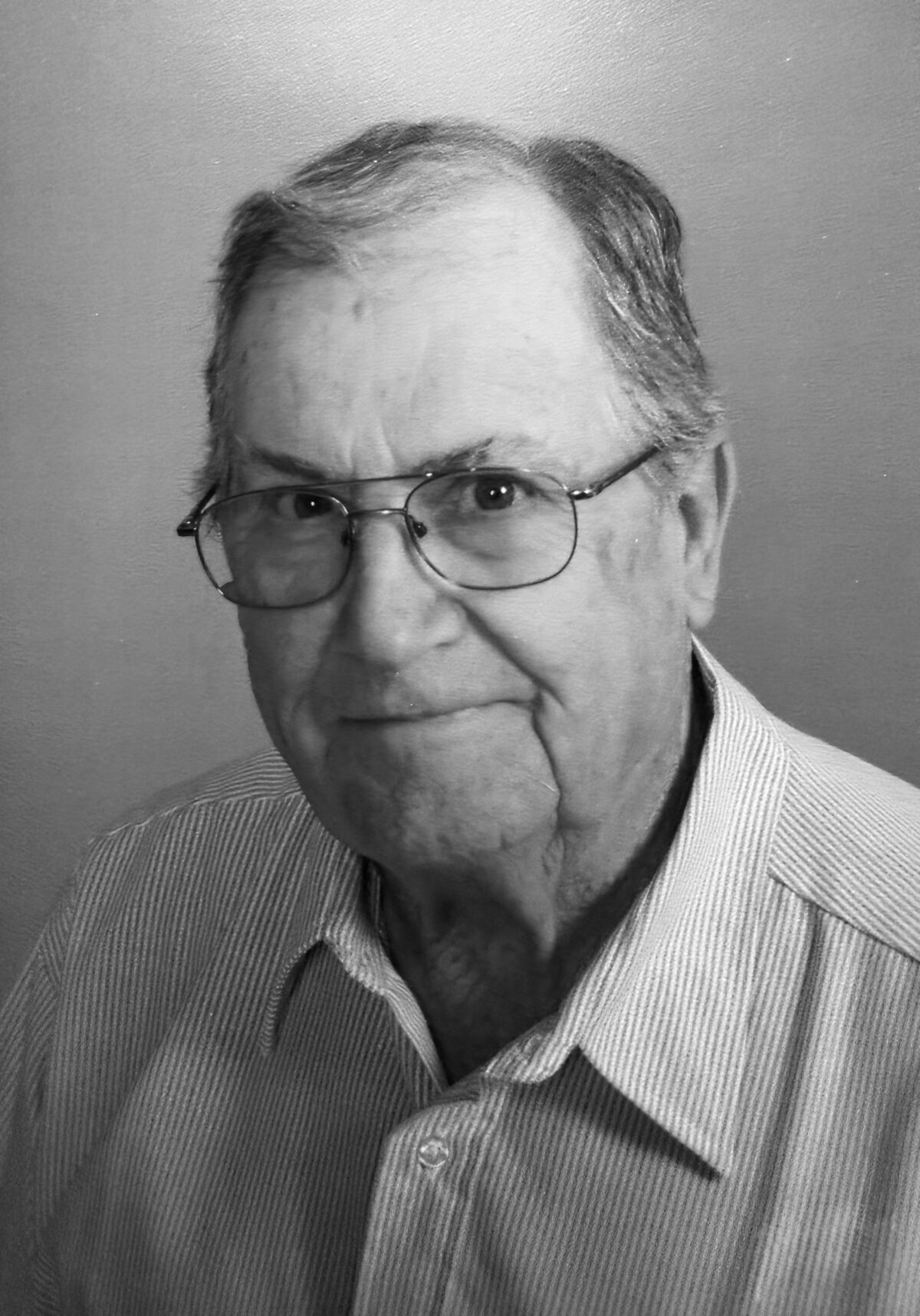
John Young Stewart, Sr., a lifelong rancher, steward of the land, and devoted family man, passed into eternity on August 21, 2026, at the age of 87, leaving behind a legacy grounded in faith, responsibility, and quiet strength. Named after both his great-grandfather and a great-uncle, John carried a name shaped by generations, and he honored it well.
He was born on July 26, 1939, on the W.A. Stewart Ranch in Barksdale, Texas, during a historic flood of the Nueces River. From the beginning, his life was marked by the rugged demands and enduring beauty of the Texas Hill Country. As the oldest of six children born to C.C. and Corrinne Stewart, John learned responsibility early. Ranch life was simple but demanding, and electricity did not reach the ranch until 1954. Though the family had little by way of material wealth, his parents instilled in him the strength, resilience, and faith that he would carry throughout his life.
John’s childhood was shaped by daily work and a deep connection to the land. He helped raise Delaine and Rambouillet sheep, Angora goats, and Hereford and crossbred cattle. When drought forced the family to adapt, they introduced Brahman cattle, an early lesson in resilience and innovation that John carried throughout his life.
His interest in agriculture grew during high school under the mentorship of agriculture teachers Joe Trees and A.L. Newman. Through Future Farmers of America, he showed sheep and Hereford cattle at major stock shows, including the San Antonio Livestock Exposition and the Houston Livestock Show and Rodeo. In 1959, he was awarded the American Farmer Degree at the National FFA Convention in Kansas City, Missouri.
Outside of his responsibilities, John enjoyed listening to Elvis Presley on the AM radio and spent Saturday nights square dancing with family. In school, he was active in athletics, playing basketball, baseball, and football. The summer before his senior year, he got his first pickup, a 1955 Chevrolet half-ton, a hard-earned symbol of independence and pride.
After graduating high school in 1957, John attended Southwest Texas Junior College in Uvalde, where he met Elizabeth Louise Hinkel, known to everyone as Betty, on a dare that would become a lifelong partnership. Both later transferred to Texas A&I College in Kingsville, Texas, where John completed his degree in 1961. On June 3, 1961, he and Betty were married in Cotulla, Texas, beginning a marriage that would span 65 years.
John began his career as an agriculture teacher at Edcouch-Elsa High School in the Rio Grande Valley, where he taught for two and a half years. Though he valued teaching, he felt called back to the land and returned to ranching full-time in 1964 with Cox Cattle Company in Devine, Texas. It was there that he met Sterling C. Evans, a respected Texas banker and cattleman who recognized John’s character and potential.
In 1967, Mr. Evans entrusted John with managing his extensive ranching operations, responsibilities that would take him and his family across multiple states and place him in charge of land and operations few ever experience. In southern New Mexico, he oversaw a 152,000-acre ranch stretching across rugged country with more than 80 miles of barbed wire fencing. He later managed another 148,000-acre ranch near Clines Corner, New Mexico, before moving to Louisiana to oversee the Little Eva Plantation, a 13,000-acre operation that included 4,000 acres of pecan trees.
In 1977, Mr. Evans moved John and his family one more time to manage the U Bar Ranch in western Bexar County, Texas. In 1982, the ranch was purchased by H.B. “Pat” Zachry, a renowned engineer and construction magnate. John continued in his role, working for the Zachry family and managing the ranch until his retirement in 2011 with the same dedication and integrity that defined his entire career.
For 50 years, John was a widely respected ranch manager and agricultural leader. He entered roles he had never held before and mastered them through determination, humility, and a willingness to learn. He did not rely on titles or credentials, but on steady effort, sound judgment, and an unshakable work ethic. Over time, through observation and experience, he developed a practiced eye and deep knowledge of the land and livestock, becoming known for his ability to select excellent horses and cattle and to grow top-quality pecans, hay, and row crops. Those who knew him understood that no matter the size or scope of the task, John would find a way to get it done—and get it done right.
John and Betty also shared a deep commitment to investing in others. Together, they devoted their time to Bexar County 4-H, the Bexar County Junior Livestock Show, and the San Antonio Livestock Exposition, where both were lifetime members and served on the Horse Show Committee. Side by side, they encouraged young people, supported families, and passed on a love for agriculture that had shaped their own lives.
Following retirement, John and Betty settled on a small property south of Lytle, Texas, where they enjoyed a quieter pace of life while remaining closely connected to their family and community. Whether a friend, neighbor, or someone he had just met, John had a natural way of connecting with people and putting them at ease, and many came to lovingly call him dad or grandpa.
Faith played a central role in John’s life. In 1986, he and Betty were instrumental in founding Medina Valley United Methodist Church in Castroville, Texas. Their commitment to the church remained steadfast from its beginning, reflecting their devotion to both God and community.
John’s greatest pride was his family, especially his wife, Betty. As a husband, he was steady and devoted; she could depend on him to lead, to provide, and to build a life for their family, no matter the uncertainty ahead. As a father, he led by example, showing his sons the value of hard work, responsibility, and loyalty. He regarded his daughters-in-law as his own, treating them with the same respect and care. As a grandfather and great-grandfather, he was steady and present, taking a quiet interest in each of them and finding joy in watching them grow. He was not a man of many words, but his expectations were clear, and his actions spoke for themselves.
He is survived by his beloved wife, Elizabeth “Betty” Hinkel Stewart; his sons, John (Lexie) Stewart, Jr., Brett (Laura) Stewart, Doak (Angie) Stewart, and Royce Stewart; his grandchildren, John Stewart III, Alex (Madison) Stewart, Charles Stewart, Benjamin Stewart, Emily (Andrew) Jones, Samuel Stewart, and Joel (Hailey) Stewart; and his great-grandchildren, William Stewart, Gwendolyn Stewart, Lorelai Stewart, Hayeden Stewart, and Raelynn Jones. He is also survived by his brothers, Robert (Rae) Stewart and Paul (Neilia) Stewart, and his sisters, Carol Ann McKelvain, Pamela Kruse, and Paula (John) Cowart, as well as numerous nieces, nephews, grand-nieces, and grand-nephews.
In his later years, John faced serious illness with the same quiet strength that marked his life, outliving expectations while continuing to invest in those around him. His life stands as a testament to hard work, humility, and unwavering faith. From the floodwaters that marked his birth to the pastures and livestock he carefully tended, he lived with purpose—shaping the land, his family, and the lives of all who were blessed to know him.
Visitation will be Wednesday, September 2, 2026 from 4:00 p.m. to 7:00 p.m. at Tondre-Guinn Funeral Home, Castroville. The Funeral Service will be at 10:00 a.m. on Thursday, September 3, 2026 at the Medina Valley United Methodist Church, Castroville. A Graveside Service will be held at 10:00 a.m. on Friday, September, 4, 2026 at Cotulla City Cemetery, Cotulla, Texas.
In honor of John, donations may be made to the Medina Valley United Methodist Church at P.O. Box 1607, Castroville, TX 78009, Cowboys for Christ at P.O. Box 7557, Fort Worth, TX 76111, or the charity of one’s choice.
Arrangements by Tondre-Guinn Funeral Home. www.tondre-guinn.com
John Young Stewart, Sr.