My Front Page

DHS CLASS OF 1975 – 50TH REUNION EVENTS – THIS WEEKEND!

“We’ve got Spirit! We’ve got Drive! We’re the Class of ’75!” DHS Class of 1975 will be celebrating their 50th reunion this year. Pictured above are some of the DHS Class Officers that year: Secretary Betty Brown, VP Sharon Wells, President Cindy Hundley, Treasurer Sybilla Irwin *Picture from the DHS 1973 yearbook.

DHS CLASS OF 1975 – 50TH REUNION SCHEDULE: No rsvp needed, just show up and join in the celebrations at all three events!
Friday, Sept. 26: HOMECOMING FOOTBALL GAME at Warhorse Stadium
– SIGN IN at your class table and get your NAME TAG.
– Sit in stands with classmates in the alumni section at south end of stands (by the ramp).
– LINE UP ON TRACK to be INTRODUCED AT HALFTIME and take CLASS PICTURE.
– Meet up at CHAYITOS afterword (500 Ross Ave. in Devine) to visit classmates and other friends – *Chayitos will be open late that night to the public and will have food & drink menus, so invite others to come on by!

Saturday, Sept. 27: Two events – Come to both events!
– 1:00pm – DExSTA ALUMNI HOMECOMING CELEBRATION at Devine VFW, aka old Green Alamo at 211 W. College Ave. The CLASS OF 1975 WILL BE RECOGNIZED & HONORED DURING THE PROGRAM and a CLASS PICTURE will also be taken. *This is the annual Homecoming celebration held by the Devine Ex-Students/Teachers Association and all Devine school alumni of all years are invited to attend.
– 6:00pm – PRIVATE CLASS REUNION at Triple C Restaurant in Devine. Join us for the ’75 Class Trivia, Door Prizes, Class Picture, and more! *Dutch Treat event with guests responsible for their own meals/drinks.

Mexican Coke Comes to America

“Wherever you go, there are three icons that everyone knows: Jesus Christ, Pele´, and Coca-Cola.”
-Pele´

If you are old like me and were blessed to grow up before we had bottled water and the internet (we just drank from the hose and played outside), then you know what a real Coke should taste like. Coca-Cola, that magic elixir and supreme concoction created by John Pemberton in the 19th century may be considered the classic American drink. It is, of course, now consumed in mass quantities worldwide. Baseball, apple pie, and Coca-Cola – all are part of America.
Foremost among my vices is an appetite for carbonated beverages. I try not to drink in excess, and most days completely refrain, but I very much enjoy an icy cold Coke (or Dr. Pepper, or black cherry soda) on occasion. And, as long as I enjoy in moderation, I refuse to feel guilty about it. I often tell my wife things could be worse. I could be slumped in the corner of our kitchen smashing empty beer cans into my forehead instead.
Back to being old – if you were ever blessed to enjoy a Coke back when Nixon was in office, you probably remember that they tasted really good back then. As a kid, it was a joy to retrieve a frosty glass bottle from the cooler at the back of Englehardt’s store. Coke tasted like it came from heaven. But if you stumble into a crowded convenience store today and purchase a plastic bottle Coke, it doesn’t taste as good. Why is that? And what is about to change? We have good news from our grand orange leader on the Potomac. Real Coke, until now only found in parts of Europe and Mexico (where it is still made with real sugar), will soon be in our stores. This is good news out of Washington. Mexican Coke is coming to America. Here is the backstory.
In 1971, a ginormous sale of U.S. grain to the Soviet Union triggered a boom in corn prices. These rising corn prices then touched off a massive increase in corn production by American farmers. Even after corn prices settled, government subsidies buoyed prices and farmers kept gleefully planting corn. Access to monstrous quantities of corn prompted companies like Archer Daniels Midland to develop new space-age corn products and markets. Enter ethanol (a topic for another column) and High- Fructose Corn Syrup.
To produce High-Fructose Corn Syrup (HFCS), a “wet-milling” process is used to isolate the starch in corn. An enzyme is then added to the starch, transforming some of the corn’s glucose into fructose. This creates a syrup with a sweetness profile similar to sugar. This development in “food science” produces a cheap sweetener, but HFCS doesn’t taste as good as real sugar.
Arther Daniels Midland had hoped to capture the big soda market with HFCS, but by the early 1980s inexpensive foreign imports had driven sugar prices way down. HFCS could not be made cheaply enough to compete. But political maneuvering soon changed things. In 1981, President Ronald Reagan, along with Congress, placed quotas on imported sugar, raising the price of sugar in the U.S. Suddenly, HFCS was a lower-cost alternative for soft drink companies, and they almost fell over themselves starting to use it. Note – Many credit the use of HFCS with the rise in obesity in this country. Today HFCS is found in almost all U.S. processed food and beverage products. Besides weight gain, HFCS has been linked to the increased risk of type 2 diabetes, heart disease, fatty liver disease, insulin resistance, inflammation, and uric acid build up. HFCS is not good for you. Some have described it as liquid Satan. Although there is some debate regarding the use of HFCS vs. sugar, numerous studies show that HFCS is metabolized to produce fat, while sugar is metabolized to produce energy. I don’t have a bowtie and clipboard, and lack a science degree, but I do know this. Every time I drink HFCS regular Coke, I feel like I’m wearing it around my waist the next day. When I enjoy a refreshing Mexican Coke, made with cane sugar, I don’t feel it.
Up until now, the only practical way to enjoy old-school good-tasting cane sugar Coke, if you could find it, was to drink Mexican Coke (sometimes available in Mexican restaurants and in select grocery stores). With the new administration’s push to Make American Healthy Again, the use of HFCS appears to be fading, which is good news. And recently, President Trump announced that the Coca-Cola Company will soon be offering again in the U.S. Coke made with real cane sugar. Look for it soon. Mexican Coke is coming to America!
© 2025 Jody Dyer
typewriterweekly.com

Novel technique scans for health cues using light and skin

Dmitry Kurouski, Ph.D., uses spectroscopy to explore everything from human health and nutrition to plant pathology. His innovative technique employing a light-based device to analyze skin composition for health indicators demonstrates just one of the many promising applications of the technology. (Hannah Harrison/Texas A&M AgriLife)

By Ashley Vargo
A handheld sensor and innovative technique developed by Texas A&M AgriLife Research scientists could one day offer a noninvasive alternative to food diaries and blood tests when monitoring diet and health.
Using a light-based device, researchers demonstrated that diet, biological age, sex and select nutrient deficiencies could be detected through the skin of live animal models with up to 90% accuracy. The findings, published in Analytical Chemistry, signal a breakthrough in noninvasive health monitoring, including the potential for wearable sensors to provide real-time nutritional and metabolic information.
The researchers believe the technology could help monitor for emerging health concerns and advance personalized dietary recommendations, a key focus of the Texas A&M AgriLife Institute for Advancing Health through Agriculture, IHA.
“Right now, dietary assessments mostly rely on self-reporting, which is often inaccurate,” said Dmitry Kurouski, Ph.D., IHA member and associate professor in the Texas A&M College of Agriculture and Life Sciences Department of Biochemistry and Biophysics. “But with this technology the size of a keychain, we can look directly at how diet changes the body and learn what is and isn’t working at the individual level.”
Diet detection with 90% accuracy
The collaborative project was conducted by Isaac Juárez, a doctoral student in Kurouski’s lab. It builds on findings from David Threadgill, Ph.D., University Distinguished Professor and head of the Department of Nutrition. Threadgill previously performed research on the health impacts of common eating styles, revealing significant differences across diet types.
“We primarily focused on trying to understand how individuals respond to different diets,” Threadgill said. “A lot of data suggests that certain diets are healthier than others, but we don’t know how that translates to the individual level.”
Together, the team repeated Threadgill’s experiment to see if Raman spectroscopy, a light-based sensing technology that Kurouski has used extensively in areas from plant diseases to forensic analysis, could be used to analyze effects of different diets on body composition.
The team fed live animal models one of six common diets, such as vegan, ketogenic and Mediterranean diets, then scanned their skin with Raman spectroscopy to generate a biochemical pattern. The scans identified distinct chemical signatures of key biomolecules, particularly lipids and collagen, linked to each dietary pattern present in the skin.
The result: they found they could distinguish diet type with nearly 90% accuracy.
“For biological systems, anything above 80% is strong,” Kurouski said. “Hitting 90% means this tool could seriously guide nutrition decisions.”
A window into age and nutrient levels
Beyond diet, the scans also revealed age, which they found had a clear relationship to certain chemical markers in the skin, particularly collagen levels.
In further analysis of the scans, the researchers were able to detect folate deficiencies. They  collaborated with Michael Polymenis, Ph.D., professor and associate head of graduate programs in the biochemistry department, and Heidi Blank, Ph.D., research scientist, who have extensively explored the impact of folate on metabolism.
“Folate deficiency is linked to birth defects and poor metabolic outcomes, but it’s hard to detect early,” Polymenis said. “Easy access to information on nutrient levels could help guide dietary interventions even before symptoms begin, especially as nutrient needs shift with age.”
Wearables on the horizon
While the current device is handheld, the researchers believe the technology could be miniaturized further and potentially incorporated into wearable technology. Eventually, such sensors could continuously monitor diet and nutrient levels, empowering users with immediate feedback on nutritional status and patterns.
As chronic diseases like obesity and diabetes continue to rise, they hope the technology could offer a proactive tool for improving public health and preventing nutrition-related health conditions.
“This is the beginning of a very exciting journey,” Kurouski said. “Diet and nutrition are critical to overall health and wellbeing. With this technology, we’re essentially able to read metabolism in real time, and someday soon, people might be able to carry this insight in their daily lives.”

Record honey bee losses prompt AgriLife Extension webinar

Texas beekeepers lost 61% of their honey bee colonies — nearly 60,000 hives over the past year, according to the most recent statewide survey of more than 400 beekeepers.
This was one of the steepest declines in beehives ever recorded in Texas, said Garett Slater, Ph.D., Texas A&M AgriLife Extension Service honey bee specialist and assistant professor in the Texas A&M College of Agriculture and Life Sciences Department of Entomology based at the Texas A&M AgriLife Research and Extension Center at Overton.
“This isn’t just a beekeeping problem, it’s an agriculture and food security challenge,” Slater said. “When we lose bees at this scale, the ripple effects touch every Texan, from farm to table.”
Strategies and solutions-oriented webinar
Recognizing the urgency, AgriLife Extension hosted a free webinar for Texas beekeepers, growers, educators and the public — What’s Happening to Our Bees? Exploring Honey Bee Declines — at 6 p.m. Aug. 29.
Slater explained the statewide survey data and explore possible solutions. The session will blend scientific findings with practical strategies to strengthen colony survival and pollinator resilience.
AgriLife Extension aids in U.S. Beekeeping Survey
AgriLife Extension’s apiculture program worked closely with the Apiary Inspectors of America and Auburn University to review and refine this year’s survey, ensuring it captures critical data on colony losses, management practices and challenges facing beekeepers.
Bees pollinate one-third of the food we eat, including high-value Texas crops like melons, berries, nuts and vegetables. A sustained decline in pollinator health could upend agricultural productivity, rural economies and ecosystem balance, Slater said.
About the webinar
Slater explained the colony loss data, highlight where declines have been most severe and how trends vary across Texas. He addressed the complex factors driving these losses, from parasitic varroa mites and problems with queen performance to other stressors like nutrition and pesticides.
A recent study by the U.S. Department of Agriculture Agricultural Research Service was discussed, which reveals an increased varroa mite resistance to the commonly used treatment amitraz, along with the rise of new viral threats.
The session provided research updates on efforts to breed virus- and mite-resistant bees, an approach aimed at reducing dependence on broad-spectrum chemical treatments and building long-term colony resilience. “Part of the solution is combining cutting-edge research with widespread public engagement,” Slater said. “By equipping beekeepers and growers with data-driven tools and resilient bee genetics, we can safeguard pollinators for the next generation.”

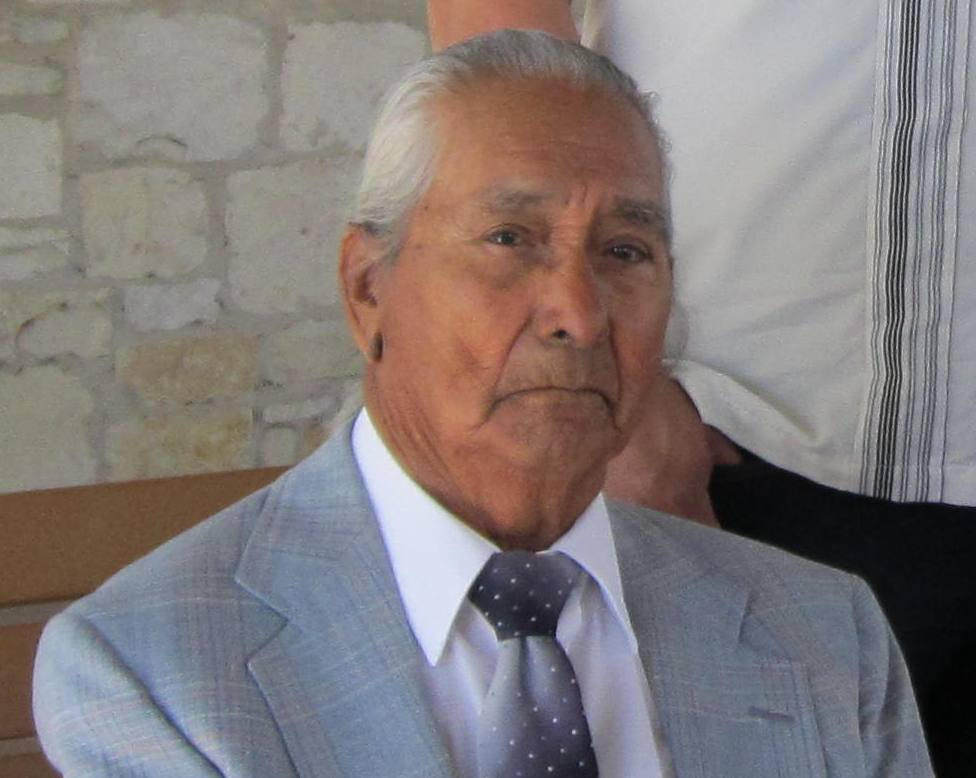
Jesus G. Orta passed away peacefully at age of 101

Jesus G. Orta, of Natalia, Texas, passed away peacefully on September 13, 2025, at the age of 101. He was born in Hondo, Texas, in 1924 to Juan and Blasa Orta.
He is preceded in death by his parents, Juan and Blasa Orta; his loving wife, Tomasita; brothers Max, Domingo, and Valente; and sister Lupita Orta. He is survived by his brother, Julio Orta; his son, Oscar; daughters, Olga and Emma Orta; five grandchildren; eight great-grandchildren; and many beloved extended family members and friends.
After losing his parents to tuberculosis at just 15 years old, Jesus stepped into a role far beyond his years, helping to raise his younger siblings with the support of his aunts and uncles. Though a history of tuberculosis prevented him from serving in the United States Armed Services, he proudly served his country as a member of President Franklin D. Roosevelt’s Civilian Conservation Corps, contributing to vital projects and supporting his community during difficult times. Determined to build a better future, Jesus educated himself through hard work and perseverance, eventually becoming a respected produce manager—a role he took pride in for many years.  
Peace and family were the guiding values of his life. Throughout his long and full journey, Jesus wore many hats: beloved son, devoted brother, loving husband, proud father, and community friend-but his most cherished role was being “Grandpa.” Everyone who knew him knew how much he loved spending time outdoors, especially enjoying nature and the simple beauty of the land he called home.
His life was a testament to resilience, family devotion, and quiet strength. Jesus will be remembered for his unwavering love, wisdom, and the legacy of care he leaves in the hearts of those who knew him.
Services will be held on Wednesday, October 1, 2025, visitation beginning at 9:00 A.M. with Rosary recited at 10:00 A.M. at Primrose Funeral Services of Lytle, Texas. Mass will begin at 11:00 A.M. at St. Andrew’s Catholic Church of Lytle, Texas with interment to follow in St. Joseph’s Catholic Cemetery of Devine, Texas.
Anyone wishing to leave condolences, share memories, or sign the online guestbook may do so by visiting www.primrosefuneralservices.com Arrangements are under the direction of Primrose Funeral Services 14822 Main Street, Lytle, Texas, 78052, (830) 709-0698.

VFW upcoming Fall Events

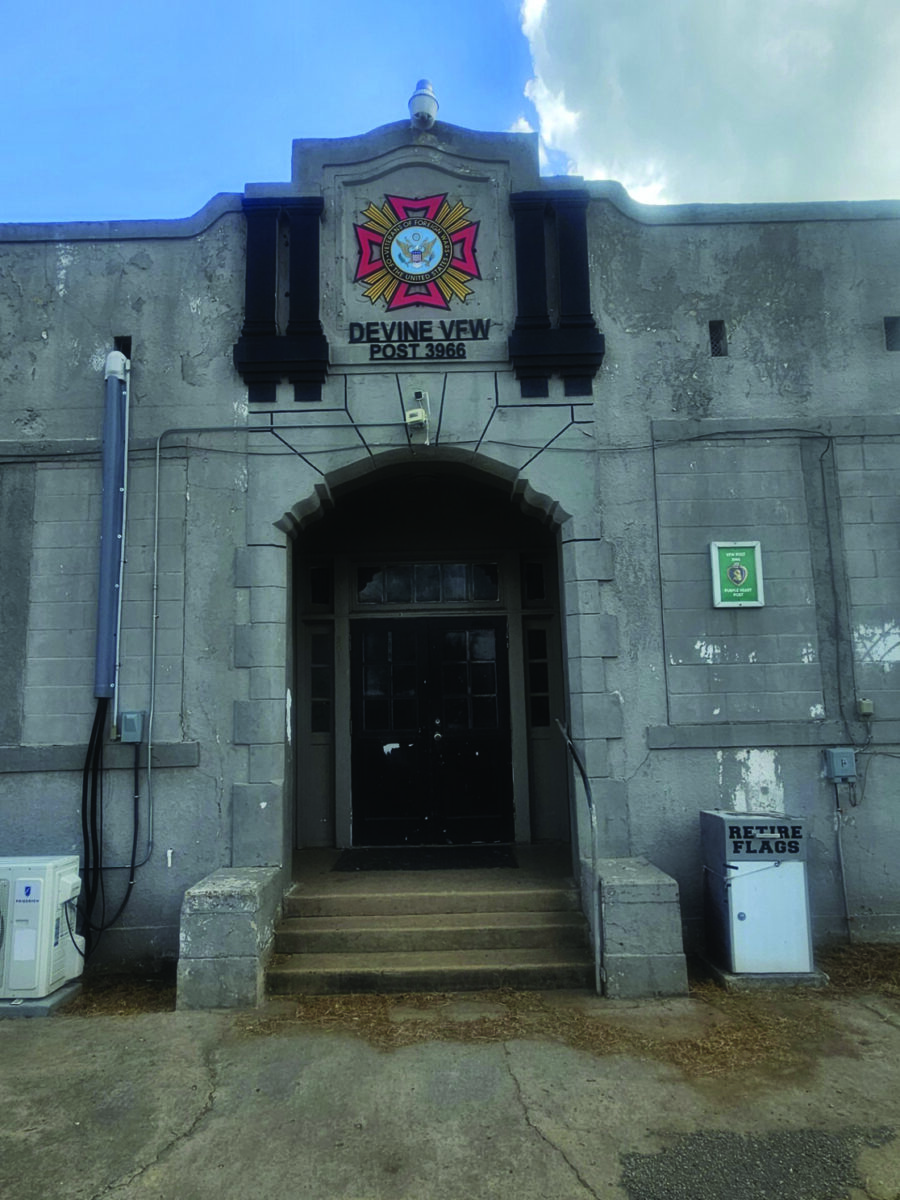
VFW Post 3966 has several events coming up this Fall. The most notable event coming up will be the haunted house in partnership with Sinister Harvest. The haunted house will be open weekends starting Septembers 26, 2025 and running through November 2, 2025. Sinister Harvest will have auditions for actors to work in the haunted house. Auditions will be on Saturday August 30, from 7:00-10:00 pm at 211 W. College Ave., Devine, TX 78016.
On Friday, October 3, 2025, Sinister Harvest will host a blood drive at the VFW. All donors will receive one FREE ticket to the Sinister Harvest Haunted House. Additional information can be found on Facebook at Sinister Harvest Haunted Attraction.
On October 7, 2025 Post 3966 will provide a Color Guard for the opening ceremony for National Night Out.
November 8 will be the VFW Golf Tournament at the Devine Golf Course. Contact Gary Saathoff at 210-289-6204.
December 6, 2025, Post 3966 will be hosting a Christmas Market from 10:00 am to 6:00 pm. Booths will be available in the Hall and outdoors in the Courtyard and parking lot. Contact James Dossey at 210-882-7689

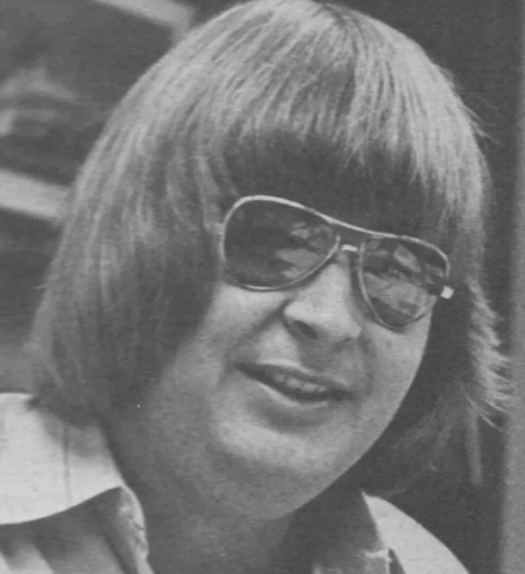
John Schweers was never allowed to play a guitar

By Kathleene Runnels

Growing up in a close-knit family in South San Antonio, Franklin Runnels had only two first cousins, John and Charles Schweers, sons of Aunt Doris, his mother’s sister. Every Sunday-after-church dinner included the grandparents, the Runnels, and the Schweers families. The two Schweers boys grew up to follow quite different dreams: Charles became a coach; John pursued a more unique career.

In their childhood, both boys were given violin lessons and were admonished to continue to study into their teenage years. While Charles fell in love with football, John picked up a guitar, even though his mother had said, “My boys will never play a guitar,” as though that would be a disgrace to the family.

John was 15 when he began to apply his violin training to learning the guitar, and his talent blossomed. While attending college at Sul Ross, he performed in a rock group that toured throughout Southwest Texas. Next, he moved to California and began developing his songwriting skills while playing in various bands.

Fortuitously, in 1972 and at the age of 26, John moved to Nashville without any money but with a pocket full of hopes. Soon he began to catch the notice of such notables as Tom T. Hall, Charlie Pride, Ronnie Milsap, and many other super stars in the music world.

Ultimately, John Schweers became one of the finest country music writers of his generation, responsible for such iconic songs as Charley Pride’s “Amazing Love,” Ronnie Milsap’s “Daydreams About Night Things,” Dave & Sugar’s “Golden Tears” and Trace Adkins’ “I Left Something Turned on at Home.”

The first No. 1 hit penned by John Schweers was Pride’s “Don’t Fight the Feelings of Love” in 1973. Pride’s follow-up single was “Amazing Love,” which also topped the country hit parade. In 1975, Nick Nixon charted with the Schweers song “She’s Just an Old Love Turned Memory.” Pride recorded it two years later and turned it into another No. 1 hit. Ultimately, Charlie Pride recorded more than 20 of Schweer’s songs.

Ronnie Milsap had a No. 1 hit with Schweers’ “Daydreams About Night Things” in 1975. The superstar repeated the chart-topping feat with the Schweers’ songs “What Goes On When the Sun Goes Down” (1976) and “Let My Love Be Your Pillow” (1977). Milsap recorded 15 John Schweers compositions.

The songwriter’s other No. 1 hit during the 1970s was “Golden Tears” by Dave & Sugar in 1979. During the decade, his songs were also recorded by Eddy Arnold, Tammy Wynette, Loretta Lynn, David Wills, Johnny Russell, Mel Street, Susan Raye, Jim Ed Brown and Jeanne Pruett, among others. Sixteen of his songs made the country popularity charts in the ‘70s.

In 1978, on Nashville’s Master Songwriters Sing Their Hits, Schweers performed his versions of “Daydreams About Night Things,” “She’s Just an Old Love Turned Memory” and “Early Fall,” all of which he wrote solo.

During the 1980s, Schweers wrote such top 10 hits as Steve Wariner’s “Your Memory” (1981), Janie Fricke’s “Do Me With Love” (1982) and Mandrell’s “No One Mends a Broken Heart Like You” (1986).

Others who recorded Schweers’ songs during the 1980s were Louise Mandrell and Tom T. Hall, The Oak Ridge Boys, Tanya Tucker…and many more.

John Schweers continued to create hits in the 1990s. Two of his biggest were “Born Country,” sung by Alabama in 1992 and “I Left Something Turned on at Home,” sung by Trace Adkins in 1997. His songs were also recorded in the ‘90s by George Jones, Mel McDaniel, Roy Clark, Travis Tritt, Johnny Rodriguez, to name some. And into the 2000s, John Schweers’ songs have been sung by Mark Wiils, George Strait, The Mississippi Mass Choir, Marty Raybon, Con Hunley, Don Everly, Brother Slade, Buck Owens and Joe Nichols, among others.

Songs that Schweers wrote from 25-50 years ago continue to receive airplay to this day. It is also noteworthy that of his 12 Top 10 hits, only three were co-written, an amazing feat in an environment of mostly co-writers.

Here’s a fun fact. In the late 80s when John had come home for a visit at the family cabin at Alto Frio, on an excursion into Leakey there was a band performing on the square, and he overheard them playing his song, “Don’t Fight the Feeling.“ He walked up to the band members and introduced himself as the writer of that song! They were elated.

John’s mother was wrong. Needless to say, the family is proud of this amazing kid who grew up on San Antonio’s south side and who used to pester his older cousin Franklin and me, the girlfriend at the time.

John Schweers passed away in Franklin, TN, in May of this year, 2025.

Maxwell Mural

By Kathleene Runnels

A while back Bo and Wendy Maxwell approached me about doing a painting for them. They wanted this painting to depict old/time Devine as Bo would imagine it in the 1800s. His vision was the young town nestled down in the valley with the train passing through. He wanted bluebonnets, oak trees, a horseman, a road runner and a rattlesnake, (which I almost refused to do), a house and barn, children playing in the lane, a farmhouse and cattle in the distance, and, of course, the hill country on the horizon. I can do that. But wait. This is no ordinary painting on canvas. This is going to be a mural painted on the Maxwell‘s dining room wall! This is going to be a 14 feet wide and 5 feet tall mural painted on site! Well, this is a new venture, but of course I can do it! 

So, when the time came around in February of this year, I gathered up my materials – paint, turpentine, brushes, acrylic paint for the base and headed to Devine. For the next six weeks, I showed up two or three times a week for a 3 to 4 hour afternoon painting session. 

It didn’t take long for Bo and Wendy to learn that I loved Big Red and chips, especially Cheetos. So, every time I showed up, they brought out the refreshments. 

Day One, with the scaffolding in place, I climbed up so I could reach the ceiling! The wall was painted dark maroon, a 14’ wide and 8’ tall maroon wall. Bo had planned to put up a rustic wooden siding along the bottom 3’, so he had taped it off. Remaining was the 14’ X 5’ wall that I had to prime with acrylic to neutralize the maroon! 

The scenario of me on the scaffolding lasted for weeks. But, eventually I painted my way down to ground level! 

On occasion Bo would make suggestions. It’s always good to have a fresh set of eyes. But the coolest thing about this project is how special Wendy and Bo Maxwell treated me and that, regardless of whether it’s true or not, they think the painting is wonderful. I recently asked Wendy if they were tired of looking at it yet. She assured me that they still enjoy it, and I certainly hope so because it’s there for posterity.

Courting…A memory shared.

By Kathleene Runnels

I’m sure everyone is familiar with the 1930s song that you still hear from time to time:  “Shine on Harvest Moon”. But I wonder if anyone knows the jingle that precedes that opening line, “Shine on, shine on harvest moon, for me and my gal….”

My mother used to sing it, and I’m fortunate to have it recorded, albeit on a cassette tape. It goes like this:

“The night was mighty dark and you could hardly see; the moon refused to shine. The couple sitting underneath the willow tree for love they pined. The little maid was kind of ‘fraid of darkness, so, she said, “l guess I’ll go.” The boy began to sigh; he looked up in the sky and told the moon his little tale of woe: “Shine on, shine on harvest moon, up in the sky….”

I found it on YouTube. And if you’re curious and want to be entertained, listen to it sung by Ruth Etting, 1931.

And speaking of courting, a term used before my time, believe it or not, one day my husband, Franklin, out of nowhere popped out with this little ditty, recorded this time on my phone. Too bad I don’t have music to accompany this jingle, but the words speak volumes.

“Don’t start courting in a hot rod, but in a buggy like your mom and dad.

How can you hear those dear sweet words when you can’t hear nothing that’s said. ‘I’d rather hear the clop of old Dobbin‘s feet.’

[and she said, in Franklin’s best high-pitched girl imitation] ‘I’d rather hear glasspacks going down the street.’

Don’t start courting in a hot rod, but in a buggy like your mom and dad.”

If you have a favorite jingle or quote or memory, get it recorded. Lately I’ve been recording my childhood memories, just little voice memos, on my phone. Don’t you wish you had asked more questions on your grandparents?

When we both still had our mothers, I sat down at the computer and typed as each of them at various times told stories of their youth and their young adulthood. These stories are priceless.

Hopefully these memories shared give a glimpse of another era, one that we lived, that the children can appreciate later on.

Elvis is Still the King of Rock ‘n Roll!

By Kathleene Runnels

For the umpteenth time I recently watched “Elvis – Aloha from Hawaii”. Whether or not you’re a fan – and why on earth would you not be – Elvis was a quintessential entertainer! Engaging with the audience, melting your heart when looking straight into the camera, performing with powerful energy, and just breath-taking to look at!

That live performance was done in 1973, and Yes, I watched it live. But in addition, my friend, Sharon Vetters Dunnam, and I went to see him live in San Antonio at the original convention center on three occasions! Yep. Three times I had the pleasure to see Elvis live! His performances were exactly like what you see on his satellite show. My only regret was that I always took my binoculars and Sharon did not (!), so I had to share! That’s what you call real friendship!

Looking back to Elvis’ beginnings, I was 12 when I saw him on our black and white TV while living in Southtown, Texas, as he performed on the Tommy and Jimmy Dorsey show. He sang “Heartbreak Hotel”, and at the end he bowed so low his hair almost touched the ground. I told my mother that this guy would be famous some day, and I went to the desk and wrote down his name. Later I heard that a girl from our high school, East Central, took a razor blade to cut his name into her thighs and pour ink into the cuts! I guess that’s the old-school way of tattooing! But rest assured, I’m not that much of a fanatic!

Now Elvis’ movies never appealed to me except for “King Creole”. I have that on VCR and I do watch it from time to time. I love the score in that movie. But as for his singing, I have every album Elvis made, and more importantly, I have every 45 rpm! When a new 45 would come out, I would hurry down to Sears on SW Military Dr and go to their record department and purchase my copy. Do I ever listen to them? Yes, I do. I actually have the “Stereo” that my dad gave me for my 16th birthday.

So, it’s August, and August marks the 48th anniversary of Elvis’ death at the untimely age of 42. My dad called me to break the news. I well recall that when his mother died at that same age, Elvis said he would not live past 42. Interesting. To think that he’s been dead longer than he lived. But boy, Sirius FM channel 79 sure does keep him “alive” as well as the amazing exhibits at Graceland. All of the exhibit buildings display fascinating memorabilia, not just the mansion, which today seems ordinary, but in its day was just that.

Listening to Elvis takes me back to those impressionable (and mostly enjoyable) high school years, and his music always touches me, whether it’s from his first recordings or his later ones, like “Just Pretend”. I only wish there had been more live performances recorded.

So, here’s to all you Elvis fans, those of my generation and younger!